
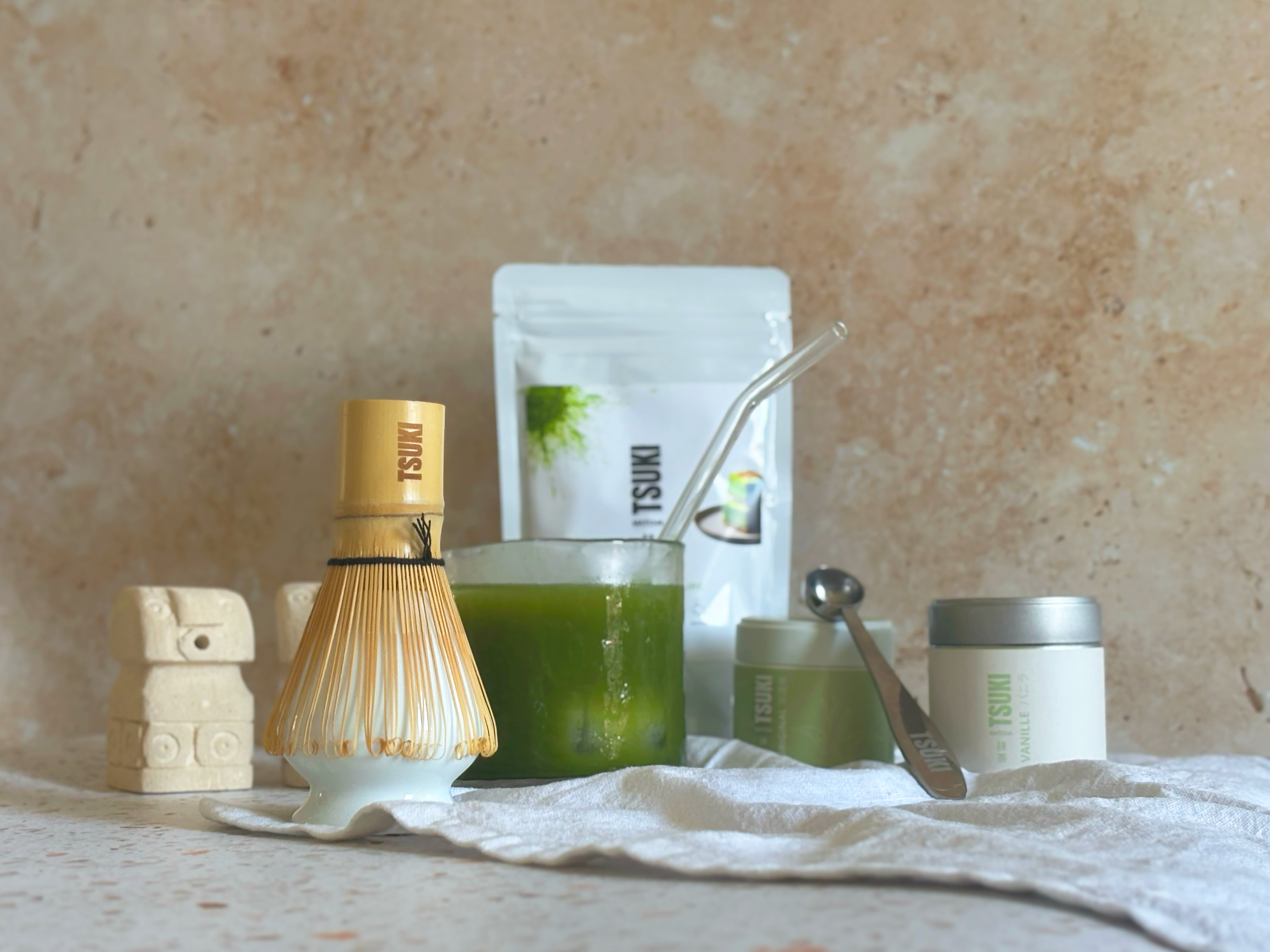

Matcha in bags or cans: which format should you buy?
Individual sachets, sticks, 30g tins, 100g pouches, or 1kg professional bags: matcha comes in very different formats, with prices varying from single to fivefold.
This guide compares each format from a purchasing perspective: cost per gram, preservation, practicality, and value for money, to help you invest wisely.
Available formats on the market
The stick or individual sachet (0.5 to 2 g)
A matcha stick is a small tube containing a pre-measured dose of powder. You tear it open, pour it into water, and mix. It's the most portable and easiest-to-use format. No need for scales or measuring spoons.
The problem is the price. A matcha stick costs between €1.50 and €3 per unit for 1 to 2g of powder. Per gram, it's the most expensive format on the market. Some sticks also contain sugar, milk powder, or flavorings. Always check that the composition only mentions pure matcha.
The 30g tin
This is the standard format for quality matcha. An airtight tin (metal or zip bag) containing 30g of loose powder. This format corresponds to approximately 15 to 20 cups, or two to three weeks of daily consumption.
The 30g format is the most common among specialized brands, and for good reason: it allows you to consume the matcha before it oxidizes too much after opening. Freshness is preserved throughout the entire period of use.
The 100g format
Some brands offer matcha in 100g pouches or tins. This is an economical format suitable for regular consumers (one to two matchas per day) or those who use matcha in cooking and baking, where larger quantities are needed.
The risk with this format is oxidation. Once opened, the matcha is exposed to air with each use. For 100g, the consumption period can reach two months or more, meaning that the last grams will be less fresh than the first ones.
The professional format (500g to 1kg)
The 500g and 1kg formats are intended for professionals: cafes, restaurants, patisseries. They offer the best price per gram but are not suitable for home use. The quantity is too large to be consumed before oxidation significantly degrades the quality.
Cost per gram by format
| Format | Average observed price | Cost per gram | Cost per cup (2 g) |
|---|---|---|---|
| Stick (1-2 g) | €1.50 to €3 / stick | €1.50 to €3/g | €1.50 to €3 |
| 30g tin | €20 to €35 | €0.70 to €1.15/g | €1.40 to €2.30 |
| 100g pouch | €40 to €80 | €0.40 to €0.80/g | €0.80 to €1.60 |
| Pro 1kg | €115 to €275 ex. VAT | €0.12 to €0.28/g | €0.24 to €0.55 |
The observation is clear: the larger the format, the lower the price per gram. But this saving is only worthwhile if you consume the matcha quickly enough for it to remain fresh. Oxidized matcha bought cheaply ends up being more expensive than fresh matcha bought in the right format.
Storage and freshness: the forgotten criterion
Matcha is one of the teas most sensitive to oxidation. Exposed to air, light, and heat, the powder gradually loses its vibrant color, aromas, and some of its nutrients. Matcha opened three months ago no longer has the same taste or benefits as freshly opened matcha.

This is why the 30g format is the most relevant for personal use. It is consumed within two to three weeks, ensuring that each cup is prepared with still-fresh matcha.
The 100g format is viable if you drink two matchas a day or if you use it regularly in cooking. In this case, the pouch will be finished in five to six weeks, which is still acceptable.
Sticks offer good individual preservation since each dose is sealed. But the extra cost per gram cancels out this advantage for daily use.
Regardless of the format, good practices remain the same: reseal tightly after each use, store away from light in a cool, dry place, and consume within two to three months of opening. Our article on matcha storage details all good practices.
Which format according to your consumption

You are discovering matcha. Start with a 30g tin of ceremonial grade matcha. It's a modest investment (less than €30) that allows you to taste 15 to 20 cups and see if you like matcha before committing to a larger format.
You drink one matcha a day. The 30g format, replenished every two to three weeks, is the freshest option. A monthly subscription is the most convenient way to never run out of matcha while benefiting from a reduced price.
You drink two matchas a day or more. The 100g format becomes relevant. You consume it in about a month, which maintains good freshness while reducing the cost per gram.
You use matcha in cooking. For baking and recipes, larger quantities are needed (5 to 15g per preparation). A 100g format or a culinary matcha in a larger package is suitable.
You are a professional (cafe, restaurant). The 1kg formats are designed for large volumes. Matcha is consumed quickly in a professional setting (several dozen cups per day), which eliminates the oxidation problem.
You travel often. A few sticks in your bag can be useful. But for a several-day trip, a small 30g tin with a shaker is more economical and satisfying. You will find nomadic preparation tips in our article where to buy matcha in France.
TSUKI formats
At TSUKI, our range is designed to meet the real needs of consumers and professionals.
Our B2C range is offered in 30g format, the ideal format to guarantee freshness with every cup. Three references are available: Original matcha (ceremonial grade, €24.99), Vanilla matcha (ceremonial grade + natural vanilla extracts, €26.99), and Culinary matcha. All are available by subscription with a 10 to 15% discount for regular consumers.

For professionals, we offer 1kg formats suitable for intensive use in cafes, restaurants, and patisseries. Our SR 1st Flush matcha (beverage) can produce 500 to 700 lattes per kilo, with a material cost of approximately €0.45 per cup. Our OGJ C10 matcha (culinary) is optimized for baking and desserts. A good professional matcha must combine consistent quality, yield, and controlled price.
FAQ: matcha formats and prices
Is cheap matcha necessarily bad?
Not necessarily, but you need to be careful. Matcha under €15 for 30g will almost always be culinary grade, with a more bitter taste and sometimes vague origin. For a pleasant drink, ceremonial matcha between €20 and €35 for 30g is the minimum for a satisfactory result. "Cheap" in matcha often means compromises on origin, shading, or grinding.
What is the normal price for good matcha?
In France, a quality ceremonial grade matcha costs between €0.70 and €1.15 per gram in a 30g format, or between €20 and €35 per tin. This represents approximately €1.30 to €2 per cup. This is comparable to the price of a coffee at a bakery, for far superior benefits.
Is the 1kg format suitable for an individual?
No. A kilo of matcha for home use would take several months to consume. Long before the end, the powder would have lost its color, aromas, and freshness. The 1kg format is designed for professionals who move stock in a few days or weeks.
Is a matcha subscription worth it?
Yes, for a regular consumer. A subscription ensures that you receive fresh matcha at regular intervals, without the risk of running out or leaving an open package for too long. At TSUKI, the subscription offers a 10 to 15% discount on each delivery, without commitment.
Is supermarket matcha tea bag good value for money?
Rarely. "Matcha tea" bags sold in supermarkets generally contain 2 to 5% matcha mixed with classic green tea. The cost per gram of real matcha is actually very high, much higher than pure powdered matcha purchased in the correct format.
How do I know if my matcha is still fresh?
Color is the first indicator. Fresh matcha is a vibrant, bright green. If it turns khaki, yellowish, or dull, it has lost its freshness. The taste also changes: oxidized matcha becomes flatter, more bitter, and loses its umami notes.
Find the format that suits you in our TSUKI matcha range, from the 30g discovery format to professional solutions.


