
Homemade matcha latte: the perfect recipe (hot and iced)
Matcha latte is the most popular matcha drink in the world. And yet, the version you order at a coffee shop often has nothing to do with what you can make at home in two minutes.

Less sugar, more flavor, one-third the cost.
This guide gives you the exact recipe for the perfect matcha latte, hot and iced, with precise measurements, milk choices, and a calorie comparison to coffee.
Ingredients and Measurements
A successful matcha latte relies on three ingredients, no more.
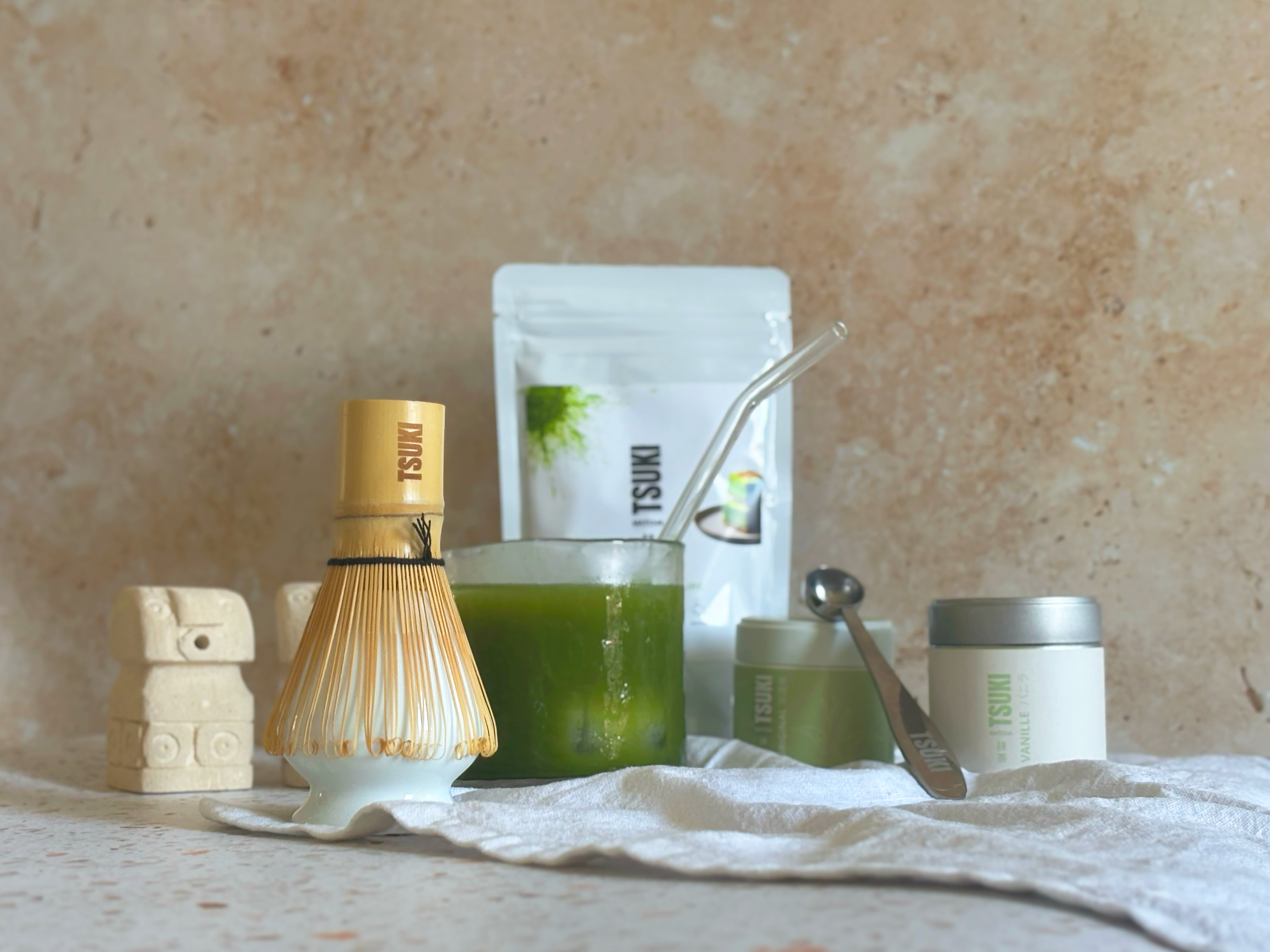
Matcha. 1.5 to 2g of powder per cup, which is about one heaped chashaku spoon. Ceremonial grade matcha makes a smooth and creamy latte. Culinary grade matcha will result in a more bitter taste, especially without added sugar. This is the most significant difference.

Hot water. 30 to 50ml of water at 70-75°C. Not boiling water. Water that is too hot burns the matcha and makes it bitter. This small amount of water is only used to dissolve the matcha and create a concentrated shot.
Milk. 150 to 200ml depending on your cup size. The choice of milk radically changes the result. Oat milk is our top choice for its creamy texture and dense foam. Whole cow's milk gives a rich, classic result. Almond milk is lighter, with a hint of nuttiness. Coconut milk adds an exotic touch and tropical creaminess.
To sweeten or not to sweeten?
With well-dosed ceremonial grade matcha, sugar is not necessary. The umami sweetness of matcha and the creaminess of milk are enough. Some prefer to flavor their preparation.
If you like a touch of sweetness, half a teaspoon of honey, agave syrup, or maple syrup works perfectly. Coffee shops often add 15 to 20g of sugar per latte.
At home, you control everything.
Hot Matcha Latte Recipe
Step 1 — The Matcha Shot
Sift 1.5 to 2g of matcha into a bowl or directly into your cup through a small, fine sieve. This step removes lumps and ensures perfect dissolution.
Step 2 — Dissolve
Pour 30 to 50ml of hot water (70-75°C) over the matcha. Whisk vigorously with a chasen (bamboo whisk) or an electric frother for 15 to 20 seconds. You should get a bright green, homogeneous liquid with a thin layer of foam on the surface.

Step 3 — The Milk
Heat 150 to 200ml of milk without boiling it (about 65°C). If you have a steam wand or frother, froth the milk. Otherwise, simply heating it in a saucepan works just fine.
Step 4 — Assembly
Pour the hot (or frothed) milk over the matcha shot. The green matcha blends with the white milk to create that characteristic gradient. Stir gently if you want a homogeneous mixture, or leave the layers visible for visual effect.
Total time: 2 minutes. An oat milk matcha latte prepared using this method rivals any coffee shop, for a fraction of the price.
Iced Matcha Latte Recipe
The iced version is even faster. No need to heat the milk.
Step 1 — The Matcha Shot (same)
Sift and whisk 1.5 to 2g of matcha into 30 to 50ml of hot water. Same technique as the hot version. Hot water is essential to dissolve the matcha properly, even in an iced latte.
Step 2 — Ice Cubes
Fill a large glass two-thirds full with ice cubes.
Step 3 — Cold Milk
Pour 150 to 200ml of cold milk over the ice cubes.
Step 4 — The Shot on Top
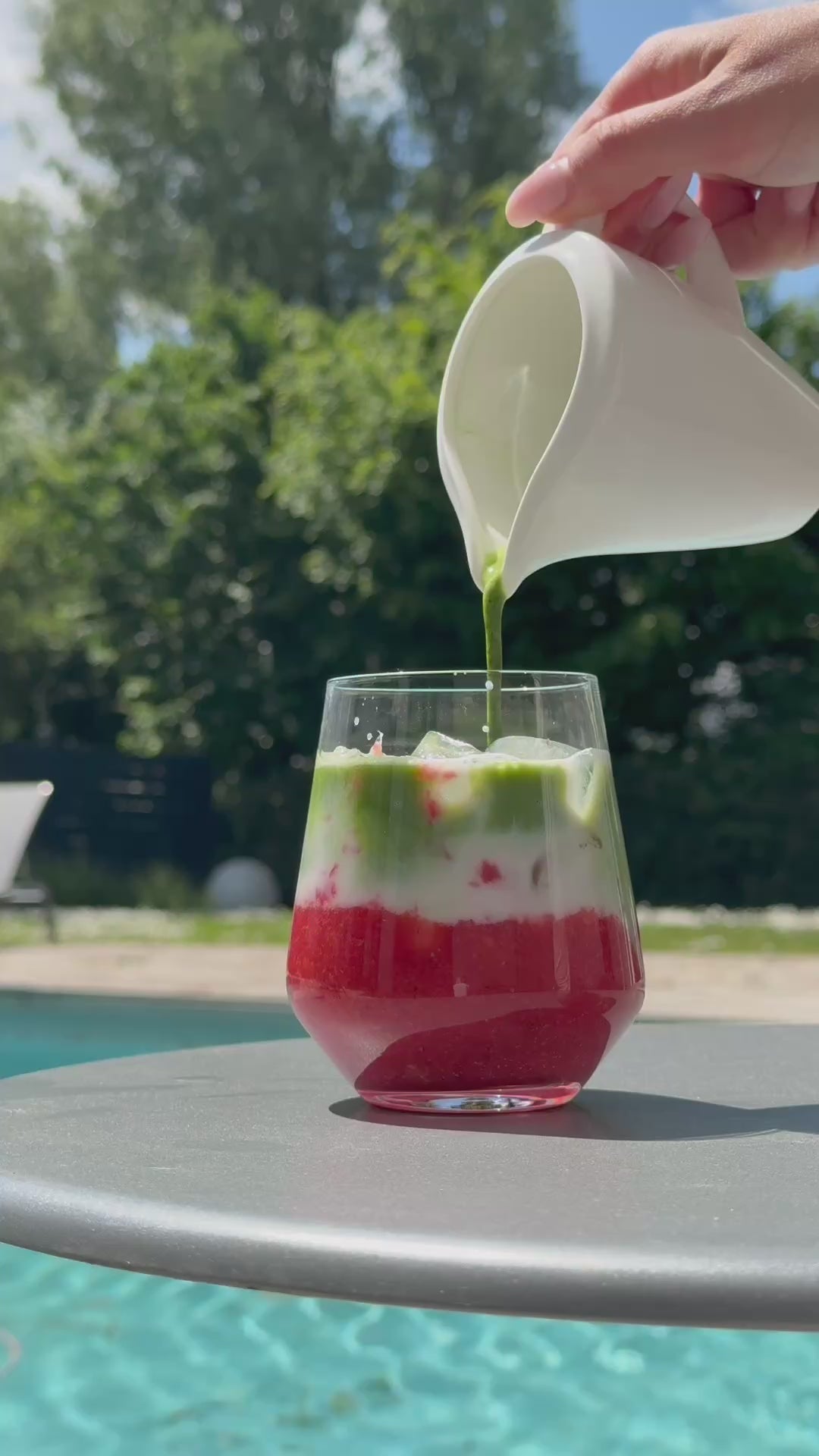
Gently pour the matcha shot over the cold milk. It will settle on the surface and create a magnificent green-on-white gradient. This is the moment to take a photo. Stir with a straw or spoon when you are ready to drink.

For even more iced variations (matcha frappé, iced coconut matcha, strawberry matcha), the article 5 easy iced matcha latte recipes details more creative options.
Calories and Comparison with Coffee
Matcha latte is often perceived as a "healthy" drink. And that's true, provided you compare comparable things.
| Drink | Calories | Sugar | Caffeine |
|---|---|---|---|
| Homemade Matcha Latte (oat, unsweetened) | ~80 kcal | 0 g added | ~65 mg |
| Homemade Matcha Latte (whole milk, unsweetened) | ~120 kcal | 0 g added | ~65 mg |
| Matcha Latte at Coffee Shop (average) | ~200-250 kcal | 15-25 g | ~65 mg |
| Cappuccino (whole milk) | ~120 kcal | 0 g added | ~130 mg |
| Café Latte (whole milk) | ~150 kcal | 0 g added | ~130 mg |
Homemade matcha latte has a clear advantage: zero added sugar by default, half the caffeine of a coffee latte, and L-theanine which provides calm, sustained energy without the peak and crash of coffee. With oat milk, it's one of the lightest drinks you can make yourself in the morning.

The version served in coffee shops is another story. Most establishments use a matcha + sugar blend (sometimes up to 50% sugar in the powder), which drives up calories and completely changes the nutritional profile. At home, with pure matcha and plant-based milk, you get the taste without the hidden sugar.
FAQ: Homemade Matcha Latte
Can you make a matcha latte without a whisk?
Yes. A handheld electric frother, a shaker, or even a small sealed jar that you shake vigorously can work. The result will be less foamy than with a chasen or frother, but the dissolution will be correct.
Why is my matcha latte bitter?
Three possible causes. The water is too hot (stay at 70-75°C). The matcha is culinary grade (switch to ceremonial grade). Or the dosage is too high (stay at 1.5-2g per cup). If you correct these three points, the bitterness will disappear.
What is the best milk for a matcha latte?
Oat milk is the most popular for its creamy texture and thick foam. Whole milk gives a rich and classic result. Almond milk is lighter. Coconut milk adds an exotic touch. There is no universal "best" milk, but oat milk comes closest to the result from a coffee shop.
How much does a homemade matcha latte cost?
With ceremonial grade matcha at €25 for 30g and oat milk at €2 per liter: about €1.80 per cup. A matcha latte at a coffee shop costs between €4.50 and €6. By making it at home, you divide the price by two to three, with better matcha and zero added sugar.
Can you make a matcha latte with cold water?
No. Matcha does not dissolve properly in cold water. Even for an iced matcha latte, always start by dissolving the matcha in a little hot water (30-50ml), then pour the shot over the ice cubes and cold milk. This step makes the difference between a smooth latte and a lumpy one.
Is a matcha latte in the evening possible?
Matcha contains about 65mg of caffeine per cup, which is half that of coffee. The L-theanine it contains mitigates the stimulating effect of caffeine, but everyone reacts differently. If you are sensitive to caffeine, prefer your matcha latte in the morning or early afternoon.
Ready to prepare your first homemade matcha latte? Our ceremonial grade matchas are smooth, not bitter, and perfect for a creamy latte from the very first cup.
Share