
Matcha Tiramisu: The Japan-Italy Fusion Recipe
Matcha tiramisu has become one of the most shared fusion desserts on TikTok and Instagram. The creaminess of mascarpone, the softness of the soaked biscuits, and the vegetal bitterness of matcha go surprisingly well together.
Here is the detailed recipe, tips for achieving the perfect texture, and presentation tricks for a dessert worthy of a Tokyo restaurant.
Why Matcha Tiramisu Works So Well
Classic tiramisu relies on a simple balance: the richness of mascarpone, the sweetness of eggs and sugar, the bitterness of coffee, and a hint of cocoa. When coffee is replaced with matcha, the same aromatic architecture is maintained, but with a more vegetal and umami profile.
The fine bitterness of matcha plays the role of espresso: it prevents the mascarpone from becoming cloyingly sweet and adds character. Its jade green color also makes it a spectacular dessert, perfectly suited for individual servings in verrines.

Matcha tiramisu is not a marketing gimmick. It is one of the rare fusion desserts that truly delivers on taste, which is why it has become popular in Japanese patisseries and Franco-Japanese restaurants.
Ingredients for 6 servings
15 minutes preparation, minimum 4 hours chilling. Ideally prepared the day before serving, allowing the biscuits to soak and the flavors to meld.
For the mascarpone cream:
- 3 very fresh eggs, at room temperature
- 80g caster sugar
- 250g mascarpone
- 1 pinch of salt
For the soaking syrup:
- 4g culinary matcha
- 200ml hot water (70-75°C)
- 30g sugar
- 1 tablespoon amaretto or rum (optional)
For assembly:
- 20 to 24 ladyfingers (or boudoirs)
- 5g matcha for final dusting
The choice of matcha is central. For this recipe, a good quality culinary grade matcha is ideal: it provides good color, has enough presence not to get lost in the mascarpone, and its price per gram remains reasonable for the total 9g used.

Step-by-step recipe
Step 1 - Prepare the matcha soaking syrup
Sift 4g of matcha into a bowl to remove lumps. Pour in 50ml of hot water and whisk vigorously with a chasen whisk or a mini electric whisk until a fine foam forms. Then add the remaining 150ml of water, sugar, and amaretto if using. Mix and let cool.
The syrup must be at room temperature when assembling, not hot, otherwise the biscuits will disintegrate.
Step 2 - Separate the eggs and whisk the yolks
Carefully separate the whites from the yolks. In a large bowl, whisk the yolks with the sugar for 4 to 5 minutes with an electric whisk, until the mixture is very pale, frothy, and forms a ribbon when the whisk is lifted. This step is non-negotiable: it is what gives the cream its lightness.
Step 3 - Incorporate the mascarpone
Add the mascarpone in two batches to the lightened yolks. Whisk at medium speed just enough to combine. If over-beaten, the cream will become liquid. The mixture should be smooth, shiny, and hold on the whisk.
Step 4 - Beat the egg whites
Add a pinch of salt to the egg whites and beat them until stiff peaks form. They should form peaks that hold when the bowl is inverted.
Step 5 - Gently mix
Fold the whites into the yolk-mascarpone mixture in three additions. First third: mix quite vigorously to loosen the mixture. The next two-thirds: use a spatula, with gentle movements from bottom to top, rotating the bowl. Stop as soon as the cream is uniform and airy. No white streaks should remain.
Step 6 - Assemble the tiramisu
Dip each ladyfinger into the matcha syrup for a maximum of 2 seconds, turning it over. No more, otherwise it will disintegrate. Arrange the biscuits side by side at the bottom of a rectangular dish (or individual verrines), pressing them together.
Cover with a layer of mascarpone cream, smooth with a spatula. Repeat: a second layer of soaked biscuits, a second layer of cream. Smooth the top well.
Step 7 - Chill
Cover with cling film and refrigerate for a minimum of 4 hours, ideally 12 hours. Resting is essential: the biscuits finish soaking, the cream firms up, and the flavors harmonize.
This is the step that distinguishes a good tiramisu from an excellent one. Never serve a freshly assembled tiramisu.
Step 8 - Dust just before serving
Just before serving, generously dust the top with sifted matcha through a small fine sieve. The matcha should form a uniform vibrant green layer. Do not do this too far in advance: matcha placed on moist cream will eventually form a somewhat pasty crust.
Presentation Tips
Matcha tiramisu is a very visual dessert. A few details make the difference between a decent homemade version and a truly successful one.
The verrine format is ideal for dinners. Use transparent glasses, straight or flared, which highlight the successive white-green layers. Count 6 verrines of 150ml or 8 verrines of 100ml.
The square dish format remains more convivial for a family dessert. Serve with a spoon directly at the table, it's warmer.
The final dusting should be generous and even. Use a fine sieve and gently tap to distribute. A touch of denser matcha in the center draws the eye.
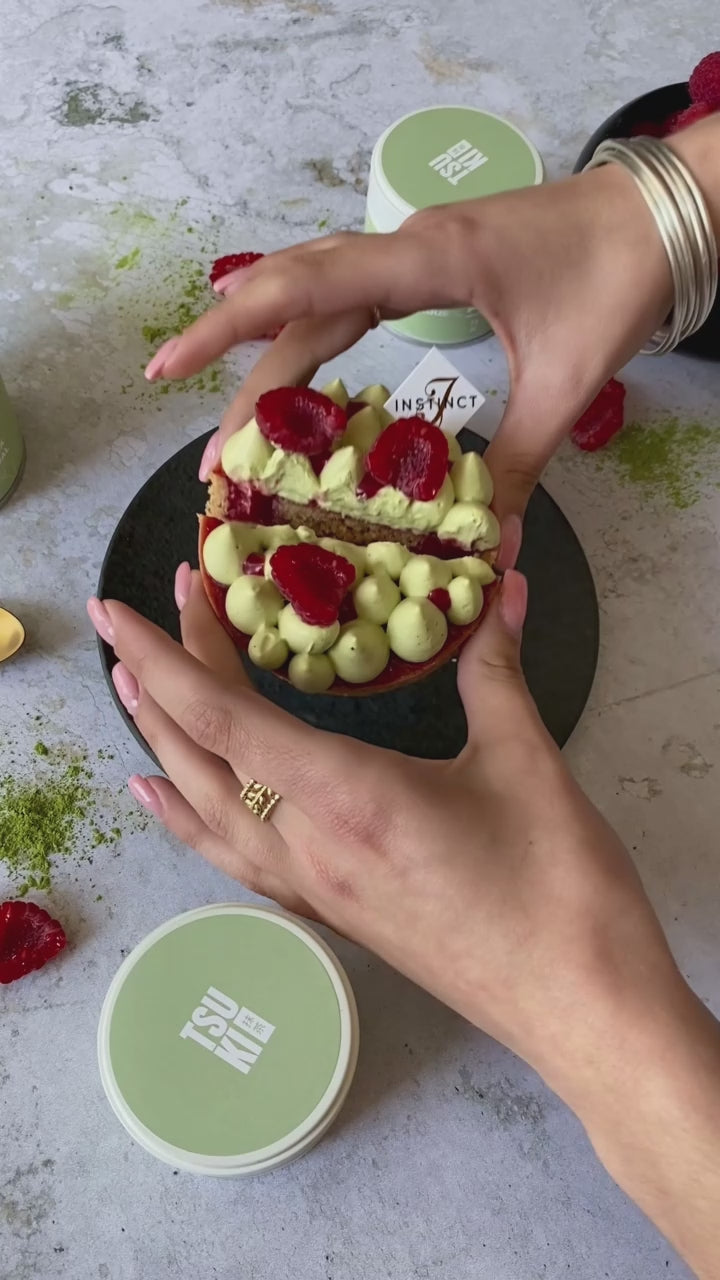
For an extra touch, add a few white chocolate shavings, some fresh raspberries on the edge, or a seasonal flower. Raspberries work particularly well: their acidity complements the matcha.

Matcha Tiramisu Variations
The basic recipe lends itself to several variations.
Matcha-strawberry tiramisu. Add 200g of sliced strawberries between the layers of biscuits and cream. Works particularly well in spring.
Matcha-white chocolate tiramisu. Incorporate 80g of melted and cooled white chocolate into the mascarpone cream. Richer, more decadent. White chocolate and matcha form a classic duo in Japanese patisserie, as in the recipe for matcha white chocolate cookies.
Vegan matcha tiramisu. Replace mascarpone with 250g of whipped thick coconut cream and 100g of blended silken tofu. Replace eggs with 200ml of whipped plant-based cream. Lighter, surprising.
Alcohol-free matcha tiramisu. Simply omit the amaretto. Replace with a few drops of vanilla extract to flavor the syrup.
To explore other matcha pastries, the guide to matcha desserts (cookies, brownies, energy balls, panna cotta) brings together several complementary ideas.
What to Serve with Matcha Tiramisu
Matcha tiramisu is rich, fresh, and distinct. A few drink pairings work particularly well.
A lightly brewed hojicha tea (roasted green tea). Its toasted notes balance the vegetal freshness of the matcha in the dessert.
A hot matcha latte for enthusiasts. The "all matcha" effect is a bit intense, but it's a signature of Japanese cafes.

A scoop of matcha ice cream alongside the tiramisu, for an all-matcha dessert plate in restaurant style.
A classic espresso also works very well: coffee and matcha complement each other instead of cancelling each other out, like in a dirty matcha.
What Matcha to Use for Tiramisu
Tiramisu uses matcha at two levels: in the soaking syrup (where it plays the role of coffee) and in the final dusting (decorative and aromatic role).
For the syrup, a quality culinary matcha is perfect. You use 4g, so there's no need for a premium ceremonial grade. The criterion: the color should be vibrant green and the taste should have presence.
For the final dusting, you can use the same culinary matcha or upgrade to ceremonial if you want a brighter green and finer notes on the palate. But for 5g spread in a thin layer, the visual difference is limited with a good culinary matcha.

However, avoid dull or khaki supermarket matchas: the final layer would be unattractive and the syrup would lack character.
FAQ: Matcha Tiramisu
How much matcha should I use in a tiramisu for 6 people?
9g in total: 4g in the soaking syrup, 5g for the final dusting. This is about 2 teaspoons. Below this, the taste will be lost in the mascarpone.
Can matcha tiramisu be prepared the day before?
Yes, it's even recommended. 12 hours of chilling allows the biscuits to soak completely and the flavors to meld. Dust with matcha just before serving, not the day before.
Why is my matcha tiramisu runny?
Three possible causes. Mascarpone beaten too much (becomes liquid). Egg whites not stiff enough. Syrup too hot during assembly. Check these three points and the texture will be firm.
Can I make matcha tiramisu without raw eggs?
Yes. Replace the eggs with 250g of whipped full-fat liquid cream (minimum 30%) and gently fold into the mascarpone. The texture is slightly denser but very successful. Ideal for pregnant women or for serving to children.
How to prevent matcha from forming a crust on top?
Dust just before serving, no more than 30 minutes in advance. Matcha placed on a moist surface eventually soaks in and loses its velvety appearance.
Does matcha tiramisu contain a lot of caffeine?
Approximately 30-40mg per serving (from the total 9g of matcha divided among 6 portions). This is less than an espresso. Suitable for serving at the end of dinner, unlike classic coffee tiramisu which can be more stimulating.
How long does matcha tiramisu keep?
2 days in the refrigerator, well covered with cling film. Beyond that, the biscuits become too soft and the matcha layer loses its freshness.
Summary
Matcha tiramisu is one of the most convincing fusion desserts. It retains the architecture of classic tiramisu but replaces coffee with a matcha syrup that brings vegetal freshness and umami notes. With 9g of culinary matcha, 250g of mascarpone, ladyfingers, fresh eggs, and 4 hours of chilling, you get a refined dessert that always surprises.
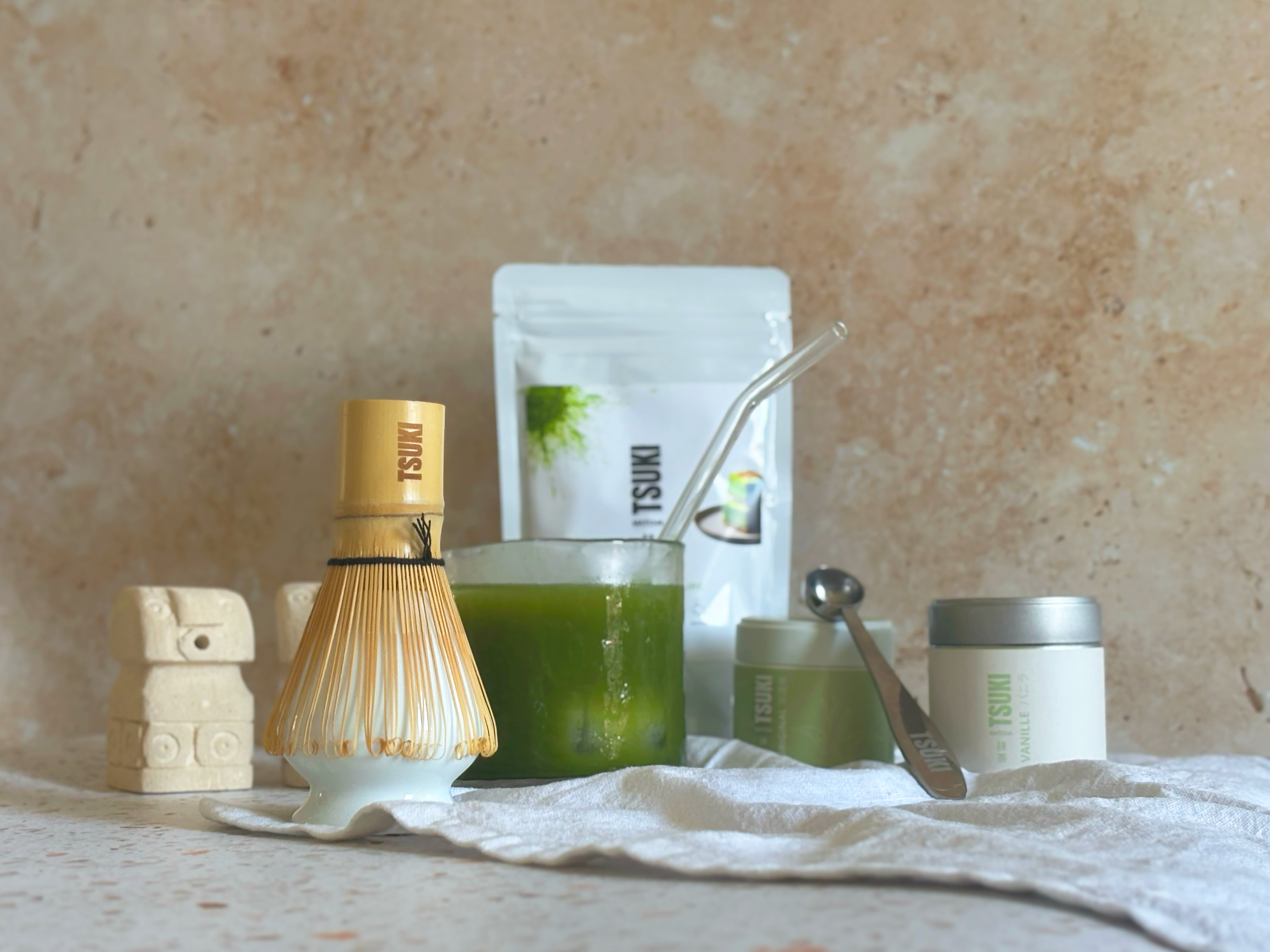
Want to make a matcha tiramisu with a vibrant jade green color and a taste that stands up to the mascarpone? Discover the TSUKI matcha selection, including culinary matcha designed for baking: sourced from Shizuoka and Kagoshima, stone-ground.
Share