
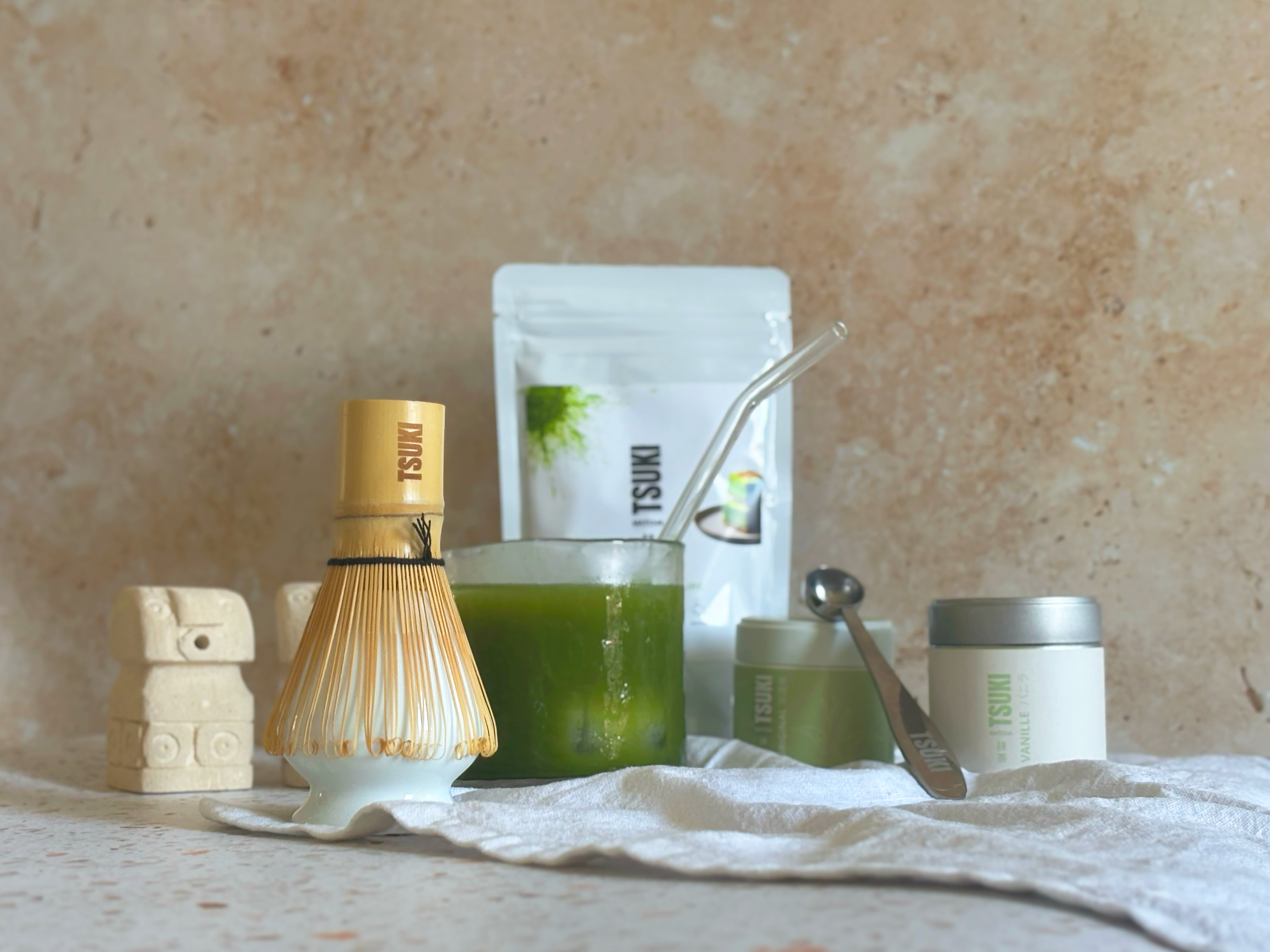

Why matcha attracts a premium clientele to your establishment
The global matcha market grew from $4.59 billion in 2024 to $4.92 billion in 2025, with an annual growth of over 7%.
In France, a coffee shop opens every week, and sales in the sector have jumped 140% since 2010.
But it's not just about volume. Matcha attracts a specific customer profile: informed, discerning, willing to pay more for a product that makes sense. Understanding this profile means understanding why matcha isn't just an addition to your menu, it's a positioning lever.
Matcha as a premium alternative to coffee
Coffee remains the staple of any coffee shop. But a growing portion of customers are looking for something else: more stable energy, without the caffeine peak followed by a crash. Matcha addresses precisely this need.

Its unique combination of caffeine and L-theanine provides a state of calm focus, without jitters. This is the number one argument cited by consumers transitioning from coffee. And these consumers don't look back: once the matcha habit is established, it becomes ingrained in their daily routine.
For an establishment, this means: a product that builds loyalty and generates recurring visits, not just impulsive purchases.
A clientele that consumes consciously
The typical matcha consumer profile in France in 2025 is a young adult (25-40 years old), urban, and mindful of what they put into their body. They read labels, know the difference between ceremonial and culinary grade, and value the product's origin.
This consumer values traceability, organic certification, and artisanal production. They are not looking for the lowest price: they are looking for consistency between the product, the experience, and the establishment's values.
In other words: offering quality matcha doesn't just attract customers. It attracts the right customers — those who spend more, come back more often, and recommend your establishment.
Matcha at the heart of the wellness and lifestyle trend
Matcha is no longer a niche product. It has become a lifestyle marker. On Instagram and TikTok, matcha generates millions of views: social media mentions have increased by over 107% in one year. The aesthetic of matcha, vibrant green, creamy foam, careful presentation, has become a visual code of well-being.

For a cafe or restaurant, this is a major asset: every well-presented matcha latte is free advertising when a customer photographs and shares it. The visual virality of matcha generates organic traffic without additional marketing budget.
Key trends driving matcha in 2025-2026:
-
Plant-based consumption: Matcha pairs perfectly with plant-based milks (oat, almond, coconut), making it compatible with vegan and flexitarian diets.
-
Functional energy: Consumers want drinks that "do something" – focus, gentle energy, antioxidants. Matcha checks all the boxes.
-
Instagrammable aesthetic: The vibrant color, latte layers, matcha latte art: the product is designed to be shared.
-
Accessible luxury: A matcha latte for €5-7 is perceived as a small daily luxury, in a context where consumers are cutting back on dining out but maintaining premium coffee.
The concrete impact on your establishment
Offering quality matcha in your establishment is not just about adding a line to the menu. It's a signal sent to your clientele: you are attentive to trends, demanding on quality, and aligned with conscious consumption.
Increase in average basket size
A matcha latte sells for €5 to €7, which is €1.50 to €3 more than a classic coffee. Matcha customers also often order an accompaniment (pastry, cookie), which drives up the average basket size.
Natural loyalty
Matcha creates a habit. Unlike ephemeral trendy drinks, matcha becomes part of a daily ritual. Customers who find their matcha spot return regularly.
Differentiation from competition
In a market where coffee shops are proliferating, matcha is a positioning marker. A cafe that serves a well-prepared ceremonial matcha immediately distinguishes itself from an establishment that uses industrial powder.
Organic visibility on social networks
Matcha is one of the most photogenic products in food & beverage. Each customer post is micro-content that works for you. Some Parisian cafes have built their entire digital reputation around their matcha offering.
What premium customers expect from your matcha offering
-
Visibly high-quality matcha: Intense green color, fine foam, mild taste. No gray or bitter powder.
-
Transparency: Being able to state where the matcha comes from, what grade, what cultivar. Product storytelling is a powerful conversion tool.
-
Careful preparation: The barista's skill matters. Whisking the matcha in front of the customer, using a chasen or a dedicated electric whisk: it's the ritual that creates perceived value.
-
Options: Hot, iced, plain, vanilla, signature. Premium clientele want to personalize their experience.
TSUKI: the matcha that speaks to your clientele
At TSUKI, we work with professionals who understand that matcha is not just an ingredient: it's a positioning. Our matchas are certified organic, come from the Yabukita cultivar (Shizuoka and Kagoshima regions), and are stone-ground in Japan.
We support each partner with product storytelling, adapted recipes, and showcasing matcha in the customer experience. TSUKI has been selected by Madame Figaro as one of the essential matcha addresses in France. This type of recognition also reflects positively on your own establishments.
➡ Want to attract premium clientele with matcha?
Discover our Pro / B2B Area and receive personalized support.
Frequently Asked Questions
Is matcha a passing trend?
No. The market is growing by over 7% per year, and social mentions are consistently increasing. Matcha is part of a fundamental movement around wellness, conscious consumption, and an alternative to coffee. Major chains (Starbucks, Blank Street, Bluestone Lane) are now integrating it as a permanent category.
What type of clientele does matcha attract?
Mainly urban 25-40 year olds, who are wellness-conscious, active on social media, and willing to pay more for a quality product. This is a high-value clientele with strong loyalty potential.
Does matcha cannibalize coffee sales?
No, it complements them. Matcha attracts a clientele that isn't satisfied with coffee alone. It expands your customer base rather than redistributing existing sales.
Should you communicate specifically about matcha?
Yes. Highlight it on your blackboard, your Instagram, and train your baristas to talk about it. Matcha is sold through experience and visuals, not by a simple line on the menu.


