

Matcha in sachets, sticks, or loose powder: which format to choose?
Individual sachets, pre-portioned sticks, pods, or loose powder in a tin… the formats for matcha are multiplying.
Each promises simplicity and convenience. But not all are equal in quality, taste, or value for money.
This guide helps you understand the real differences to choose the format best suited to your use.
Matcha in individual sachets: beware of confusion
When you search for "matcha tea in sachets," you come across two very different things.
The first are infuser bags containing green tea leaves mixed with a little matcha powder. These are not matcha sachets. They are green teas flavored with matcha. The actual amount of matcha in these sachets rarely exceeds 2 to 5% of the content. The rest is sencha, classic green tea, or other leaves. The taste, color, and benefits have nothing to do with real matcha.

The second are small sachets containing pure matcha powder, often pre-portioned for one cup. This format exists with some Japanese and Western brands. It offers the advantage of convenience and exact dosing with each use.
The main problem with individual matcha sachets concerns preservation. Matcha is extremely sensitive to oxidation. Each time the powder is exposed to air and light, it loses freshness, color, and aroma. Even in a sealed sachet, the surface area exposed to oxygen is significant compared to the small amount of powder contained. To fully understand the importance of preservation, consult our guide on how to preserve matcha.
Another point: the cost. Matcha in individual sachets often costs between €2 and €4 per cup. This is three to five times more expensive than the same quantity of loose matcha powder of equivalent quality.
In summary
Convenient for travel or the office, but more expensive per gram and less fresh than well-preserved loose powder. Always check that the sachet contains 100% pure matcha, without mixing with other teas.
Pre-portioned matcha stick
The matcha stick is a small, elongated tube containing an individual dose of matcha powder (usually 0.5 to 2g). You tear it open, pour the contents into a cup of hot water, mix, and it's ready. Some brands offer instant matcha in sticks, sometimes enriched with sugar, powdered milk, or flavorings.
This format appeals for its simplicity. No need for a measuring spoon, no risk of overdosing, no tin to close. It's the most portable format available.

But this convenience comes at a cost. Matcha in stick format is the most expensive per gram, often two to five times more expensive than loose powder. The quantity per stick is also often low (0.5g in some sticks), which results in a very light matcha, far from the intensity of a real preparation with 1.5 to 2g of powder.
Quality varies enormously from one brand to another. Some sticks contain real, good-quality matcha. Others are mixtures of green tea powder, sugar, and artificial flavors that are matcha in name only. Always read the ingredient list. A good matcha stick should contain only one ingredient: matcha.
In summary
Ultra-convenient for on-the-go, but often too light in dosage, expensive per gram, and of highly variable quality. Suitable for occasional emergency use, not as a daily format.
Loose matcha powder: the choice for quality
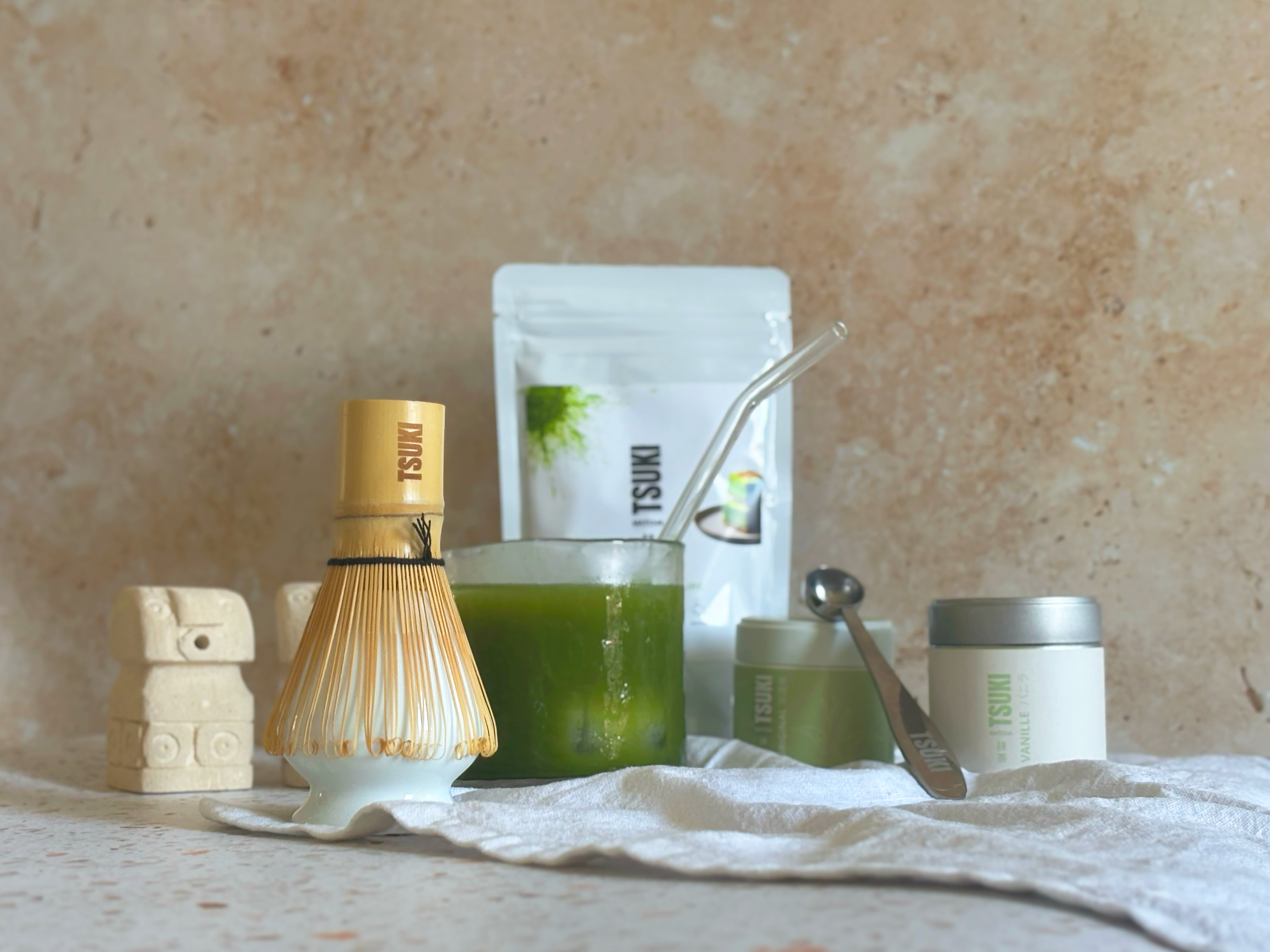
Loose powder is the classic format for matcha. An airtight tin (often metal or a resealable bag with a zip) contains the powder that you measure yourself with a spoon. This is the format used in Japan for centuries, both for the tea ceremony and for daily consumption.

Why is it the best choice? Three main reasons.
Freshness. In a well-designed airtight container, the powder is protected from air and light between uses. Oxidation is limited. You maintain a vibrant color and taste for several weeks after opening. Provided, of course, that you properly preserve your matcha.

Flexible dosing. With loose powder, you adjust the quantity to your liking. 1g for a light matcha. 2g for a more intense matcha. 3 to 4g for a thick and concentrated koicha. You can also use it in cooking, baking, or smoothies without being limited by a pre-portioned format.
Price per gram. Loose powder is the most economical format. A ceremonial grade matcha in a 30g tin costs between €0.80 and €1 per cup (for 1.5 to 2g per preparation). This is two to four times cheaper than a stick or an individual sachet of equivalent quality.
At TSUKI, our matchas are available in a 30g format in an airtight packaging designed to preserve freshness. This format corresponds to approximately 15 to 20 cups of matcha, or two to three weeks of daily consumption. Our three matchas are offered in this format: Original matcha, Vanilla matcha, and Culinary matcha.
In summary
The best quality-freshness-price ratio. Free dosing, optimal preservation, total versatility (drinks + cooking). Simply requires a measuring spoon or scale, and ideally a good whisk for preparation.
Comparison table: sachet vs. stick vs. loose powder
| Criterion | Individual sachet | Pre-portioned stick | Loose powder (tin) |
|---|---|---|---|
| Price per cup | €2 to €4 | €1.50 to €3 | €0.80 to €1.30 |
| Dosing | Fixed | Fixed (often low) | Free and adjustable |
| Freshness | Good (sealed) | Good (sealed) | Optimal (airtight) |
| Common quality | Variable (often mixed) | Variable | Generally superior |
| Travel convenience | Good | Excellent | Average |
| Daily use | Not well suited (expensive) | Not well suited (expensive) | Ideal |
| Versatility | Drink only | Drink only | Drinks + cooking + baking |
| Environmental impact | Packaging per dose | Packaging per dose | Single packaging |
Which format to choose depending on your usage?
The best format depends on how you consume your matcha.
You drink matcha every day at home. Loose powder is the obvious choice. It's the most economical, freshest, and most versatile format. Pair it with a chasen or an electric whisk for optimal preparation in less than two minutes.
You travel often and want to take your matcha with you. One or two quality sticks in your bag can be a lifesaver. But for a multi-day trip, a small tin of loose powder with a shaker is more economical and satisfying. Consult our article prepare matcha without a whisk for nomadic preparation tips.
You are new to matcha and are hesitant. Start with a 30g tin of loose powder. It's a modest investment (under €30) that allows you to taste about 15 to 20 cups and understand your preferences before committing to a larger format or subscription.
You use matcha in cooking or baking. Loose powder is essential. Sticks and sachets do not allow for free dosing of the quantities needed for recipes. For cooking, TSUKI Culinary matcha is specially designed to withstand cooking while providing color and flavor.
You are looking for a gift. A complete matcha kit with loose powder, whisk, spoon, and bowl offers a much more memorable experience than a box of sticks. It's a true ritual to give, not just a simple product.

FAQ: matcha in sachet, stick, and pod
Is matcha in an infuser bag real matcha?
No, in the vast majority of cases. Infuser bags sold in supermarkets contain green tea leaves with a very low proportion of matcha (often 2 to 5%). Real matcha is a powder that is whisked into water, not a tea that is infused. If the packaging says "green tea with matcha" or "matcha flavored," it is not pure matcha.
Are matcha pods for Nespresso machines a good option?
Nespresso-compatible matcha capsules exist but have significant limitations. Water passes under pressure through the capsule, leaving some of the powder behind. The result is inferior to matcha prepared with loose powder. For a detailed comparison, read our article matcha Nespresso capsules: the guide.
Is instant matcha real matcha?
It depends. Some "instant matchas" are simply finely powdered matcha packaged in a stick to dissolve quickly. In this case, it is real matcha. Others are mixed preparations with sugar, powdered milk, or artificial flavors. Check the ingredient list: a good matcha should contain only one ingredient.
How many cups can you make with 30g of matcha powder?
With 1.5 to 2g per cup (the recommended dosage), a 30g tin allows you to prepare approximately 15 to 20 cups of matcha. This represents two to three weeks of daily consumption.
Does loose powder oxidize faster than a sealed sachet?
Once opened, loose powder is exposed to air with each use. But in a tightly sealed airtight container, stored away from light and heat, it remains fresh for two to three months. A sealed individual sachet may preserve the freshness of a single dose better, but the extra cost compared to loose powder is rarely justified. Find our tips for matcha preservation.
Which loose matcha powder to choose for beginners?
For beginners, choose a ceremonial grade matcha with a mild and balanced taste. Culinary matchas are more bitter and less suitable for a first tasting as a drink. At TSUKI, our Original matcha is the ideal starting point. If you prefer a richer taste, the Vanilla matcha offers natural biscuit notes that appeal even to palates most reluctant to matcha.
Ready to choose the right format? Discover our matcha powders and start your matcha ritual with the format that truly respects the quality of the tea.


