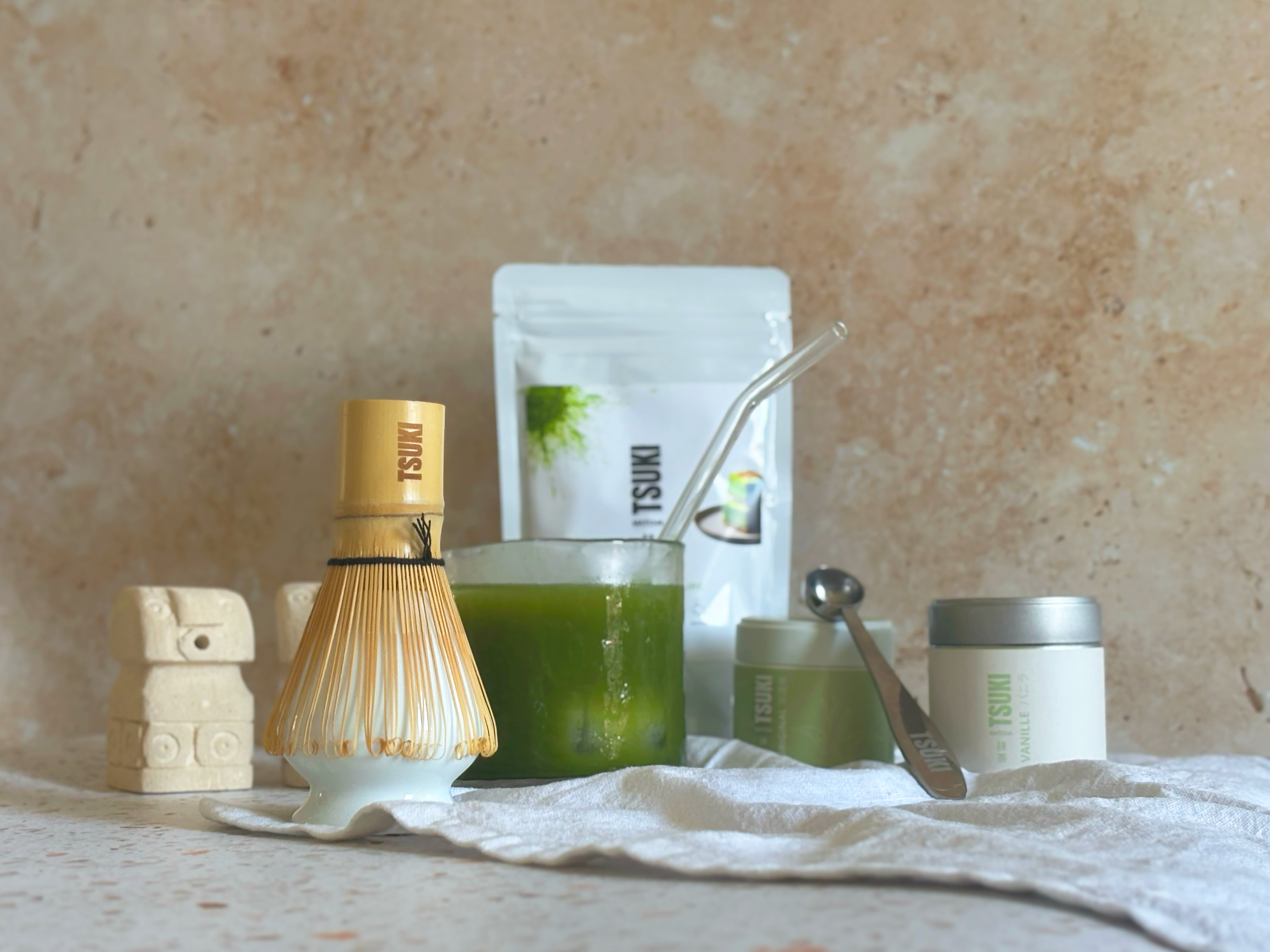

Flavored matcha: vanilla, strawberry, coconut… which flavor to choose?
Plain matcha is a marvel in itself. But in recent years, flavored matcha has taken over coffee shops and kitchens worldwide.
Vanilla matcha, coconut matcha, rose matcha, cherry matcha… the variations are endless.
This guide helps you understand the differences, choose the right flavor, and discover combinations you might not have tried yet.
Plain matcha vs. flavored matcha: what's the difference?
Plain matcha is simply powdered green tea leaves. Nothing else. Its taste is vegetal, slightly umami, with a natural sweetness when it's of good quality. This is the purest and most traditional version.

Flavored matcha, on the other hand, combines this same green tea powder with natural flavors or extracts that complement the taste profile.
Vanilla, fruit, flowers… the idea is not to mask the taste of matcha, but to enrich it.
The quality of the base matcha remains the determining factor. Flavored matcha made with poor quality powder will taste bitter, even with added flavors. In contrast, ceremonial-grade matcha combined with quality natural extracts produces a balanced and delicious result.
Some brands use artificial flavors, added sugar, or colorings. Always check the ingredient list. Good flavored matcha should only contain matcha tea and natural flavors, nothing more.
Vanilla matcha: the absolute bestseller
Vanilla matcha tea is by far the most sought-after combination. And for good reason. Vanilla brings biscuity, round, comforting notes that naturally pair with matcha's vegetal and umami profile.

It's the ideal gateway for people who find plain matcha a bit too "green" or too vegetal. Vanilla softens the taste without denaturing it. The result is a drink that evokes a dessert, while remaining light and sugar-free.
Vanilla matcha is particularly well suited for lattes. With oat milk, the roundness of vanilla is amplified. With almond milk, you get a lighter and more subtle result.
To explore all options, check out our guide which milk to choose for your matcha lattes.
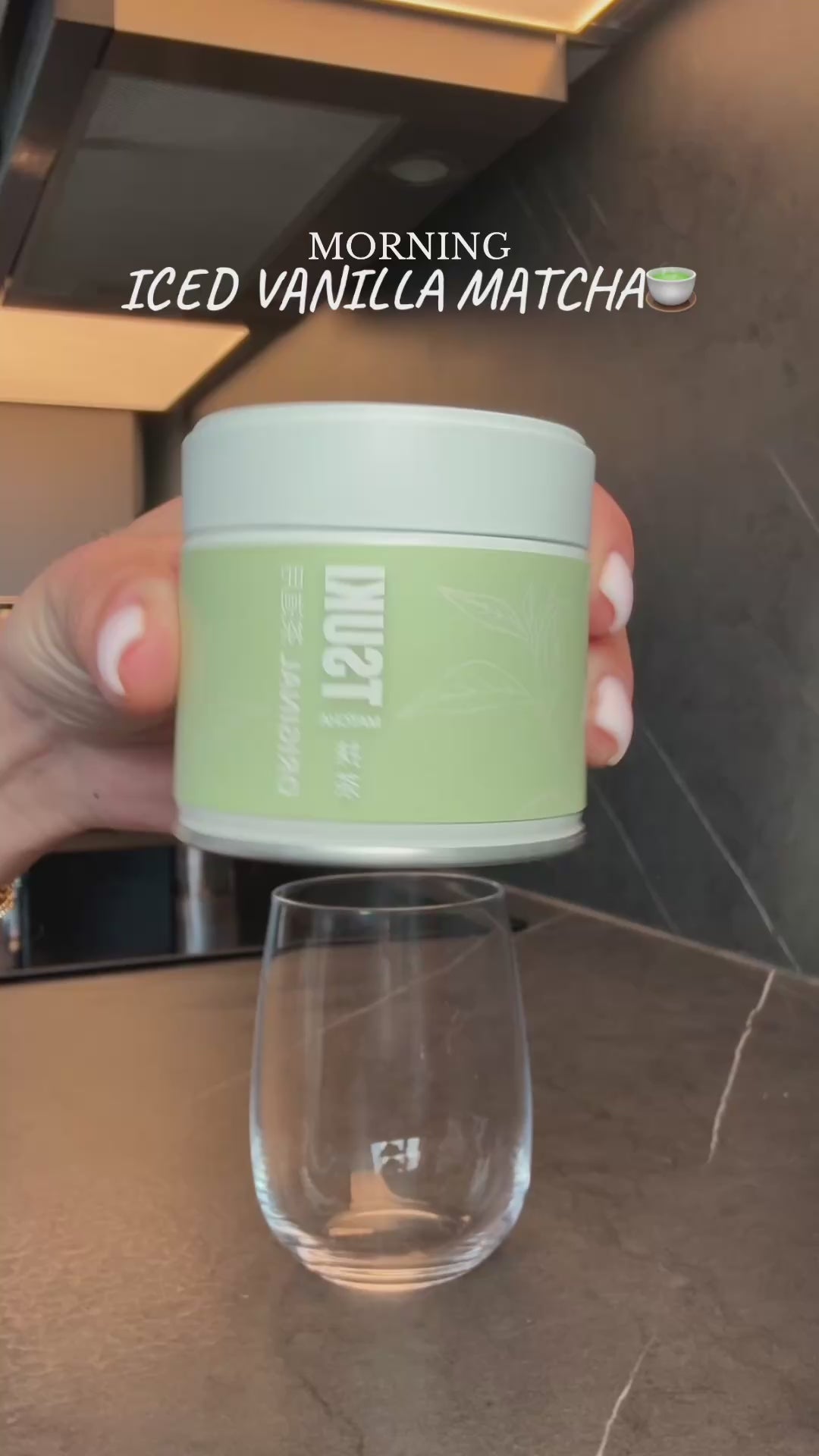
TSUKI Vanilla Matcha
Our Vanilla Matcha is a ceremonial grade matcha grown in Kagoshima, southern Japan, in a volcanic region renowned for its rich soils. The Yabukita cultivar is hand-picked during the first shoots of spring, shaded three weeks before harvest to stimulate chlorophyll and L-theanine production.

The leaves are then processed into tencha and slowly ground on stone mills to obtain an ultra-fine powder. To this exceptional base, we add natural vanilla extracts (100% natural) which bring biscuity, sweet and comforting notes.
The result is a matcha that combines the authenticity of Japanese tea with the subtle gourmandise of vanilla. It can be enjoyed as a creamy latte, in its traditional version, or even in pastries. Over 100 customer reviews confirm this unique sweetness.
Strawberry matcha: the social media star combination
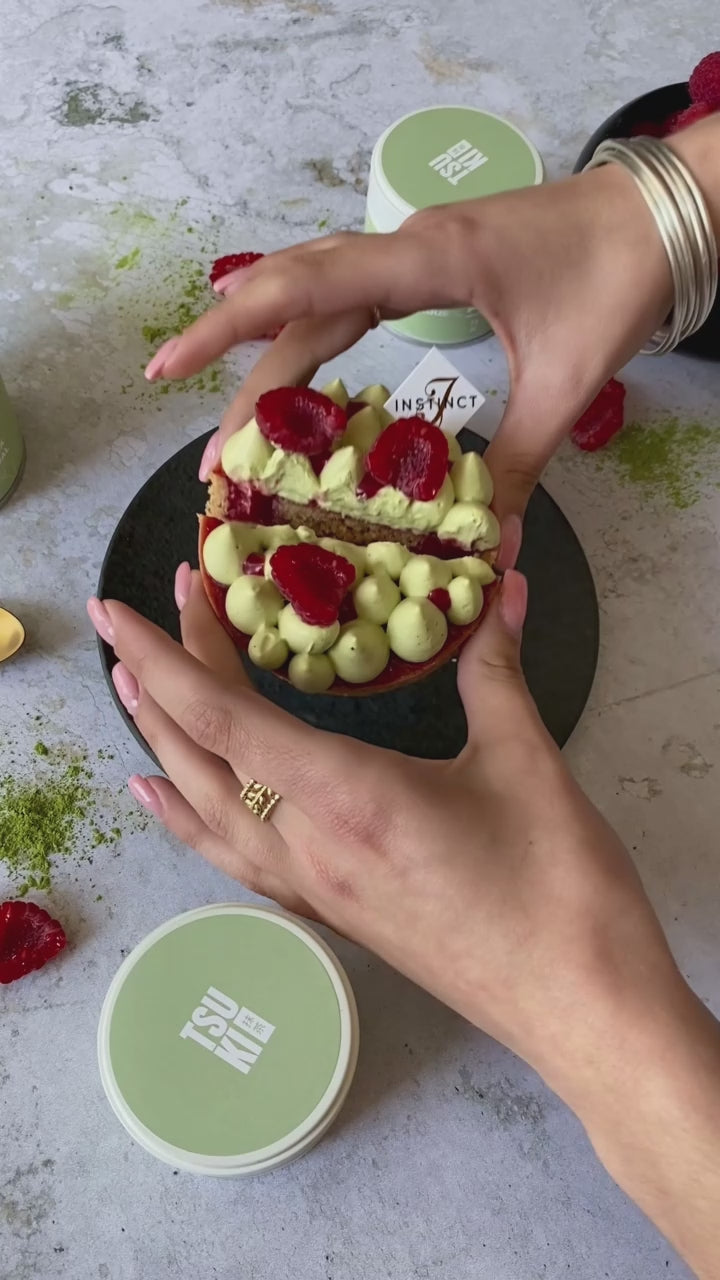
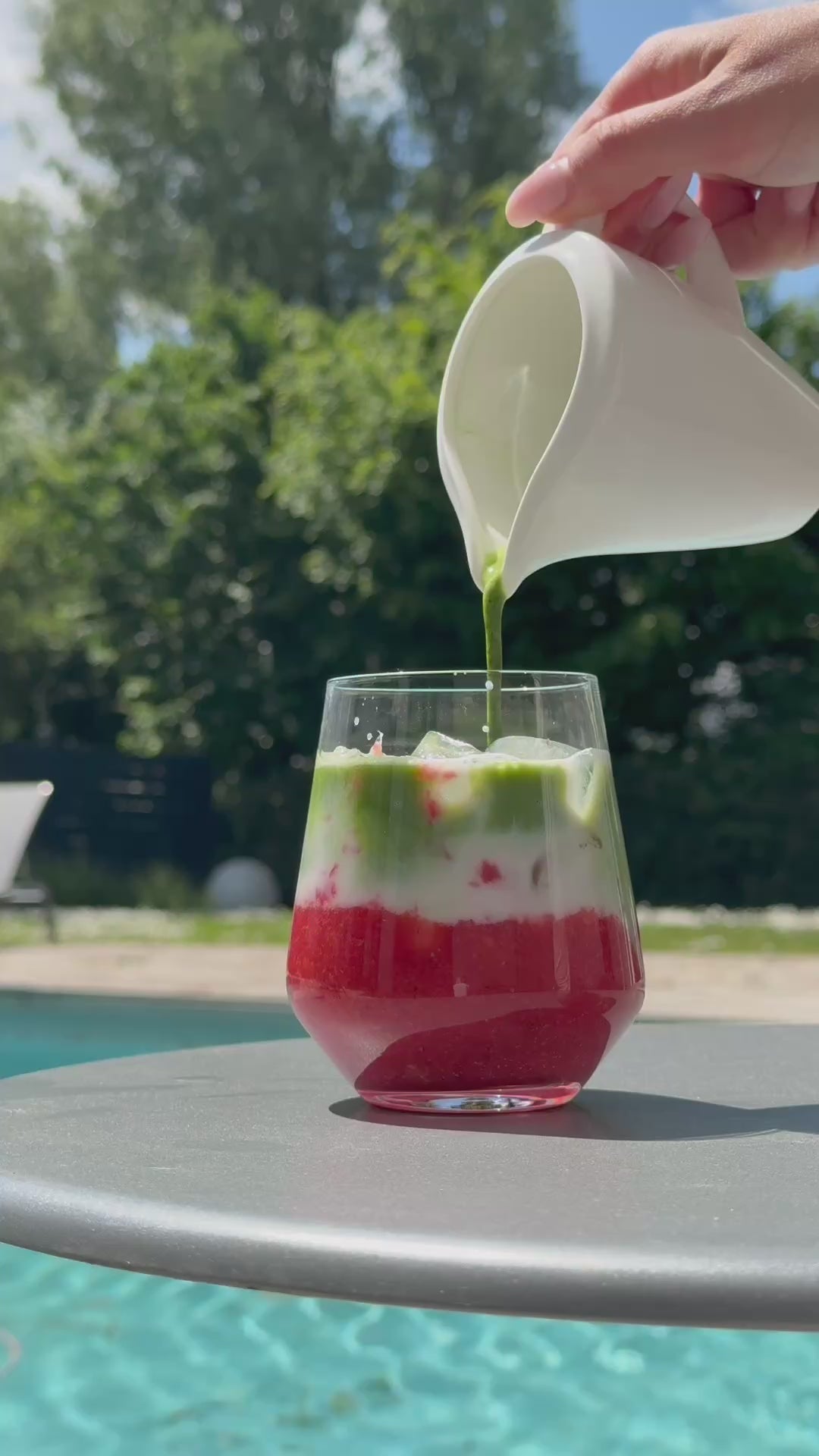
Strawberry matcha has become a visual and gustatory phenomenon. The contrast between the vibrant green of matcha and the bright pink of strawberry creates spectacular drinks, perfect for Instagram and TikTok.

Taste-wise, the gentle acidity of the strawberry balances the vegetal notes of matcha. It's a refreshing combination that works equally well as an iced drink or a smoothie.
Unlike vanilla matcha, strawberry matcha doesn't really exist as a quality pre-flavored powder. The best approach is to combine good plain or vanilla matcha with fresh strawberries, homemade coulis, or natural strawberry syrup.
To make a creamy strawberry matcha at home, discover our recipe for creamy strawberry matcha or our more fruity variant Strawberry Matcha Beats.
Coconut matcha: a tropical escape
Coconut matcha is a natural pairing that appeals to lovers of tropical flavors. Coconut milk provides a creamy richness that envelops the matcha and rounds out its taste profile. The two ingredients share a certain vegetal sweetness that makes them complementary.
Coconut matcha works equally well hot or iced. As a hot drink, it’s like a revisited Thai tea. As an iced drink, it's a perfect summer beverage.
For the more adventurous, the combination of matcha, coconut, and pineapple creates an amazing tropical drink. This is exactly the principle of our Matchacolada recipe, a non-alcoholic cocktail that combines matcha, coconut milk, and fresh pineapple.
To prepare a coconut matcha at home, simply replace your usual milk with coconut milk in any matcha latte recipe. The TSUKI Vanilla Matcha pairs particularly well with coconut milk thanks to its biscuity notes that complement the sweetness of the coconut.
Rose matcha: floral elegance
Rose matcha, also called matcha rose, is a less common but growing trend. The combination of matcha with rose powder, rose water, or dried rose petals results in an elegant, slightly floral, and visually refined drink.

The taste is subtle. The rose doesn't overpower the matcha; it adds a fragrant dimension reminiscent of oriental pastries. It's a popular choice for those looking for something different and sophisticated.
For a homemade rose matcha, add half a teaspoon of food-grade rose water to your classic matcha latte. If you like the visual aspect, you can also add a few edible rose petals as a garnish.
Rose matcha is ideally prepared with a quality matcha that has a mild taste. A matcha that is too bitter would clash with the delicacy of the rose. The TSUKI Vanilla Matcha works very well in this combination, as its sweet and biscuity notes marry beautifully with the floral notes of the rose.
Other trendy flavors: cherry, mango, and more
Beyond the classics, other combinations are gaining popularity.
Cherry matcha. Cherry brings a gentle acidity and fruity depth that pair well with matcha's umami. Use cherry coulis or tart cherry juice for an authentic result. This flavor is particularly appreciated in Japan, where cherry (sakura) is a strong cultural symbol.
Mango matcha. Mango is sweet, creamy, and rich in flavor. As a smoothie or iced latte, mango matcha is a burst of tropical freshness. Combine fresh or frozen mango with matcha and coconut milk for an exotic matcha smoothie.
Lavender matcha. More niche, lavender matcha combines the calm of matcha with the soothing qualities of lavender. A drizzle of lavender syrup in a cold matcha latte creates a floral and elegant drink.
Caramel matcha. For lovers of gourmet flavors, salted caramel pairs surprisingly well with matcha. A dash of caramel syrup in a vanilla matcha latte creates an irresistible liquid dessert.
How to choose your flavored matcha according to your tastes
The choice depends on what you are looking for in your cup.
Are you new to matcha? Start with vanilla matcha. It's the sweetest, most accessible, and most versatile flavor. The TSUKI Vanilla Matcha is designed exactly for this: to make matcha delicious and pleasant from the very first cup.
Do you like fruity flavors? Go for strawberry matcha or mango matcha. These combinations work particularly well as iced drinks and smoothies.
Are you looking for originality? Rose matcha or cherry matcha will surprise you. These more subtle flavors add a touch of sophistication to your daily ritual.
Do you want a tropical effect? Coconut matcha is for you, especially as a Matchacolada with a hint of pineapple.
In all cases, the quality of the base matcha is essential. A ceremonial-grade matcha, mild and not too bitter, pairs better with flavors than a more robust culinary-grade matcha. At TSUKI, our range is designed to offer this natural sweetness, whether you choose the Original matcha for your own combinations or the Vanilla matcha ready to enjoy.
FAQ: flavored matcha
Does flavored matcha contain sugar?
It depends on the brand. Some commercial flavored matchas contain sugar, milk powder, or additives. At TSUKI, our Vanilla Matcha contains only ceremonial-grade matcha tea and natural vanilla flavors. No sugar, no additives.
Does vanilla matcha have the same benefits as plain matcha?
Yes. The base remains a ceremonial-grade matcha, rich in antioxidants, L-theanine, and catechins. The addition of natural vanilla extracts does not alter the nutritional properties of the tea.
Can flavored matcha be used in baking?
Absolutely. Vanilla matcha works very well in matcha madeleines, matcha ice cream, and many other recipes. Vanilla adds an extra gourmet dimension to your creations.
What is the best flavored matcha for a latte?
Vanilla matcha is the number one choice for lattes. Its biscuity and sweet notes pair perfectly with milk, whether plant-based or dairy. For a complete guide, read our article which milk to choose for your matcha lattes.
How to flavor your own matcha?
Start with a quality plain matcha and add your own ingredients. Some examples: a dash of rose water, homemade strawberry coulis, coconut milk, a drizzle of lavender syrup, or a pinch of cinnamon. Matcha is a blank canvas that lends itself to all creativity.
Fruit matcha: which fruits pair best with matcha?
The fruits that work best with matcha are strawberry, mango, banana, pineapple, raspberry, and cherry. Fruits with a natural sweetness or slight acidity balance the vegetal notes of matcha well. For optimal results, combine them in a smoothie or iced latte.
Ready to try flavored matcha? Order TSUKI Vanilla Matcha and discover a new way to enjoy matcha.
Share