
Murasaki Matcha: the most beautiful autumn drink of the moment
Murasaki Matcha: The Smoothest Matcha Drink You'll Ever Make
Murasaki (紫) means purple in Japanese. And that's exactly what this drink promises: an explosion of natural colors, from the deep green of matcha to the intense purple of sweet potato, crowned with airy coconut cream and a crispy ube cookie.
If you think matcha is an intense, vegetal drink not suited for palates sensitive to bitterness—this recipe will change your mind. Murasaki Matcha is probably the smoothest and most accessible matcha drink you can make. Every ingredient has been carefully chosen to soften, sweeten, and envelop.
This creation from The Brick Room in Marseille perfectly embodies the aesthetic of new signature drinks that redefine coffee culture: visual, plant-based, and rooted in traditions from multiple cultures. Here, Japan (matcha), the Philippines (ube), and Southeast Asia (coconut) come together in one glass.
What is ube? All about the purple sweet potato
Ube (pronounced "ooh-beh") is a variety of sweet potato native to the Philippines, recognizable by its intense purple flesh. Unlike orange sweet potatoes, it has a sweeter, slightly vanilla and nutty—almost floral—taste.
Its natural color comes from anthocyanins, antioxidant pigments also found in blueberries and red cabbage. These pigments are sensitive to heat and acidity, which is why a gentle preparation is preferred to preserve their vibrant purple hue.
Ube has become one of the trendiest ingredients in global cuisine in recent years, popularized by Filipino pastries in the United States and adopted by creative cafes in Europe. In Murasaki Matcha, it plays the role of deep sweetness—a natural counterpoint to the vegetal intensity of matcha.
Why combine vanilla matcha with ube?
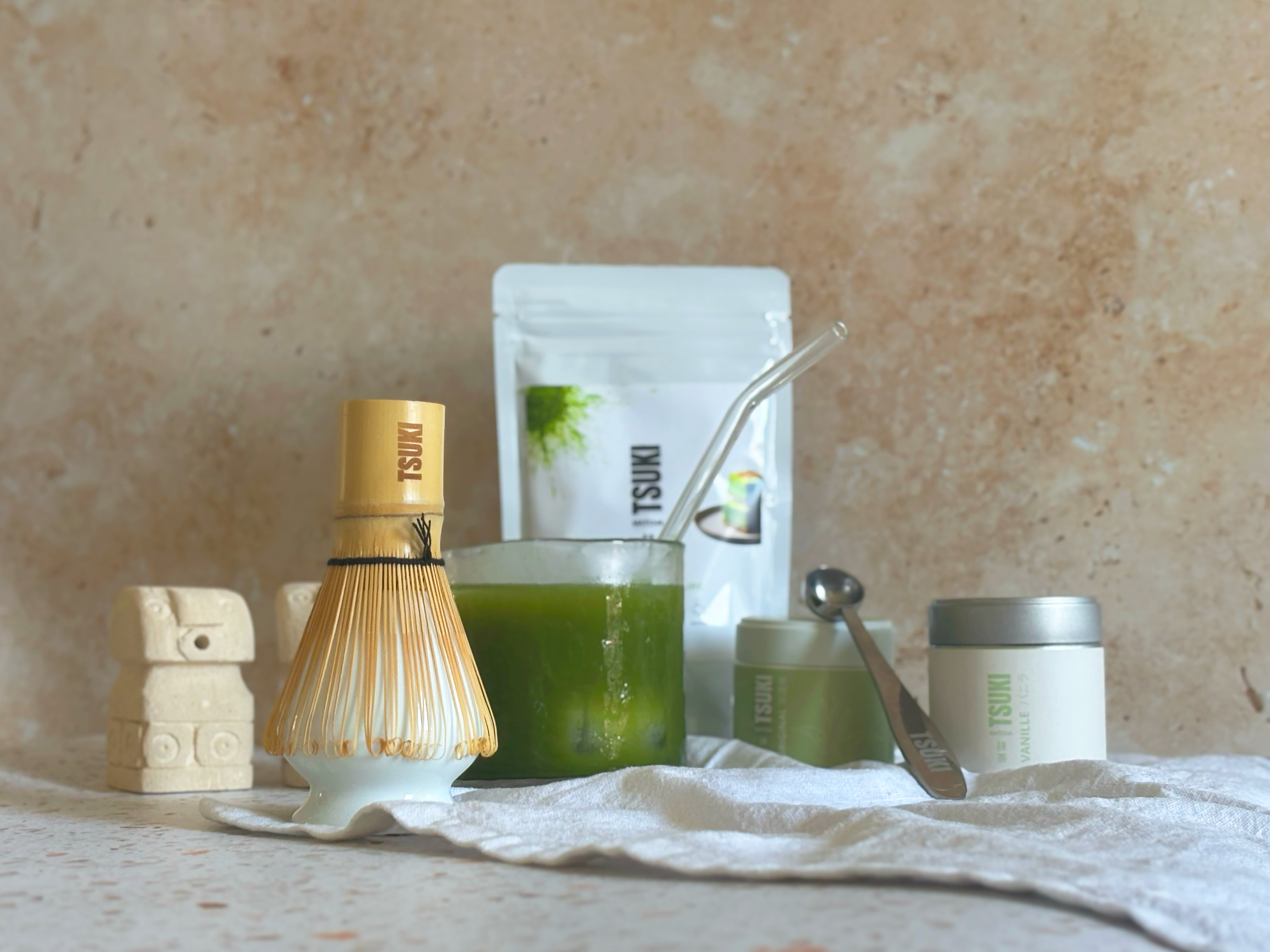
This is where the genius of this recipe lies. Classic matcha—powerful, umami, slightly bitter—could have overpowered the subtle sweetness of ube. That's why we recommend TSUKI Vanilla Matcha here, a ceremonial grade matcha infused with real Madagascar vanilla.
Its natural sweetness and warm, floral notes create a perfect dialogue with ube: two round, generous flavors that amplify each other without competing. The result is a drink that is both comforting and sophisticated—the smoothest of all matcha variations.
TSUKI Vanilla Matcha also brings its characteristic jade green color, which visually contrasts with the purple of the ube to create this spectacular gradient. The whipped coconut cream on top further softens the whole, and the sprinkled cinnamon ties all the elements together in a warm, enveloping aromatic profile.

Murasaki Matcha Recipe (for 1 glass)
Ingredients:
- 2g of TSUKI Vanilla Matcha
- 50ml hot water (75°C max)
- 100g ube puree (cooked and blended purple sweet potato)
- 100ml liquid coconut milk (liquid part of the can)
- 150ml plant-based milk (oat, almond, or coconut)
- 40ml very cold coconut cream (solid part of refrigerated can)
- 1/2 tsp ground cinnamon
- 1 ube cookie or homemade shortbread for garnish (optional)
- Ice cubes
For homemade ube puree:
- 1 medium purple sweet potato
- or 2 tbsp ube powder reconstituted with a little hot water
Preparation steps:
1. Prepare the ube puree Steam or bake the purple sweet potato (200°C, 40 min) until tender. Peel and blend with 100ml of liquid coconut milk until a smooth and homogeneous cream is obtained. If it's too thick, add a little more milk. Strain if necessary. The puree can be stored in the fridge for 3 days.
💡 Shortcut: Canned ube puree (Jufran brand or similar) is available in Asian grocery stores and gives excellent results. Ube powder also works—reconstitute with hot water according to package instructions.
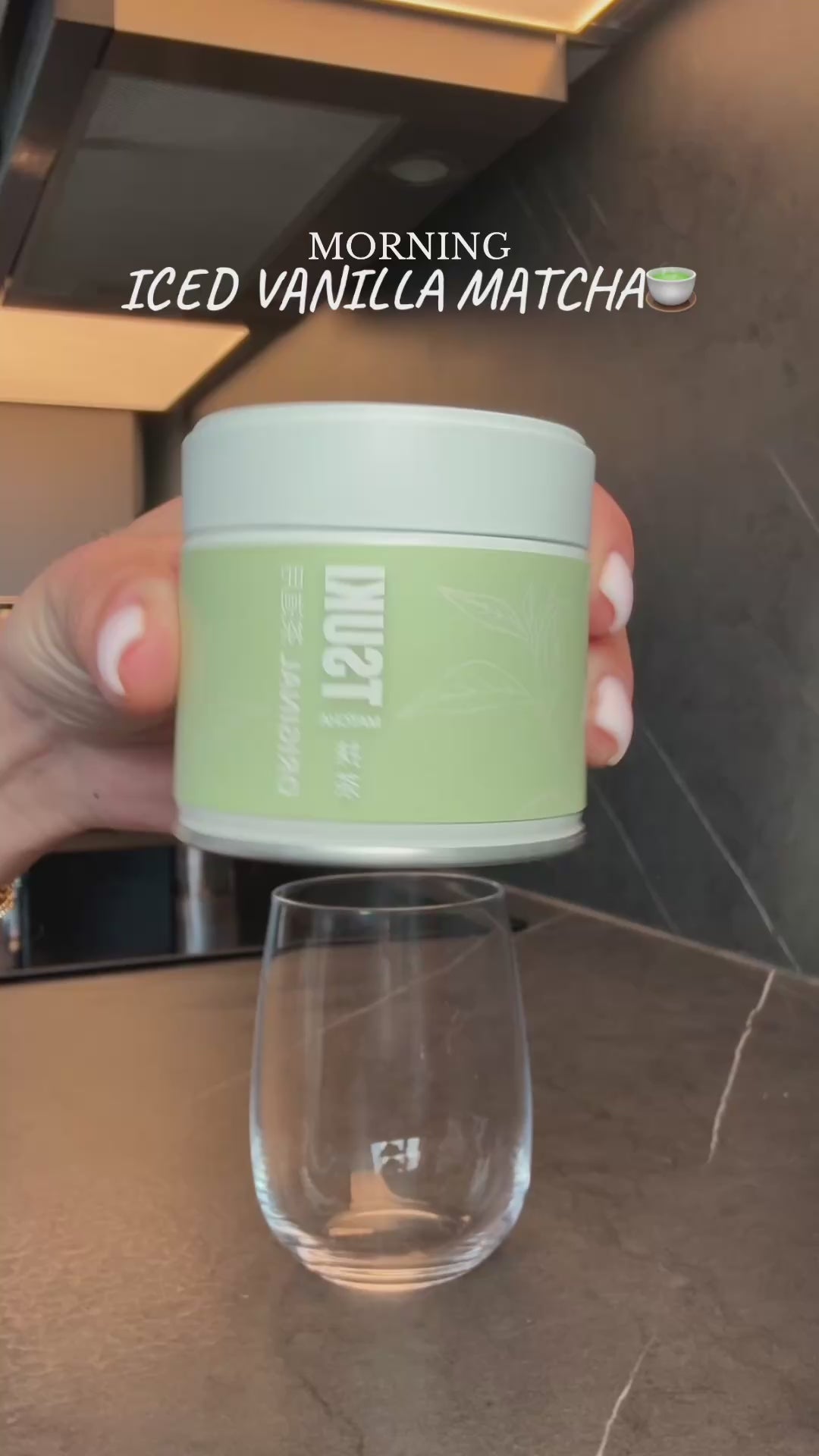
2. Whisk the vanilla matcha Sift 2g of TSUKI Vanilla Matcha into a matcha bowl. Pour 50ml of water at 75°C. Whisk in a W-motion until a beautiful, dense foam forms. The vanilla aroma that emerges is immediately recognizable—this is the sign that you have quality matcha.
3. Whip the coconut cream Refrigerate a can of full-fat coconut milk at least 12 hours in advance. Carefully open and spoon out the solid part. Whisk until you get a light and silky whipped cream. Set aside in the fridge.
4. Assemble in layers In a tall cylindrical glass, add ice cubes. Pour in the plant-based milk. Gently add the ube cream, pouring it over the back of a spoon to create the purple layer. Then pour the vanilla matcha on top for the green layer.
5. Finishing touches Generously top with whipped coconut cream. Sprinkle with cinnamon. Place an ube cookie on the rim of the glass for the signature touch.
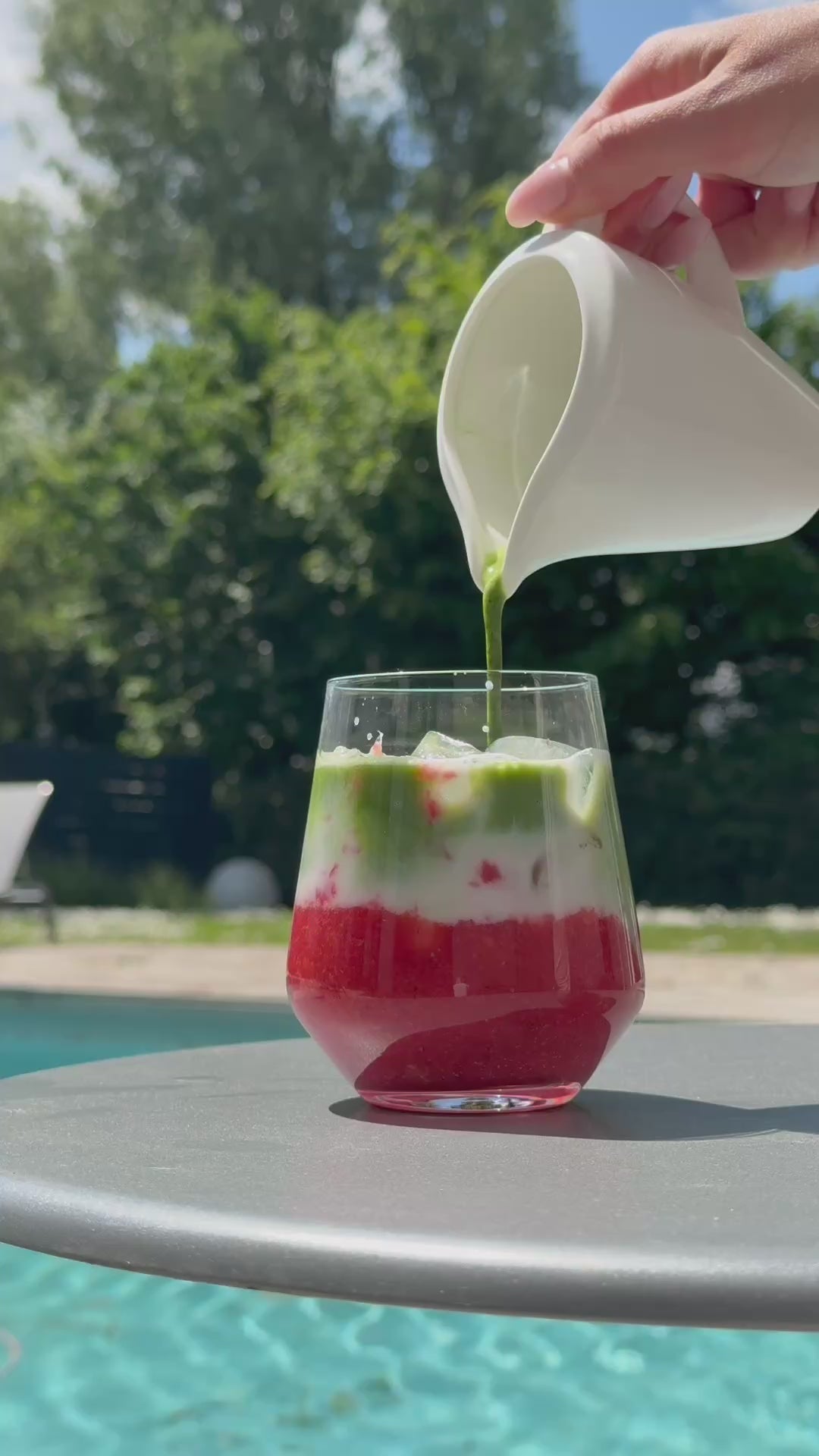
💡 The secret to distinct layers: The density of each element is key. The ube (denser) stays at the bottom. The matcha (lighter) floats on top. The coconut cream (foamy) remains on the surface. Pour slowly, always over the back of a spoon, and do not mix.
Variations and adaptations
Hot version: Replace the ice cubes with warm ube diluted in warm coconut milk, and pour the whipped vanilla matcha on top. The coconut cream melts gently—this is the most enveloping and smoothest version of the recipe.
No added sugar version: Ube and TSUKI Vanilla Matcha are naturally sweet—this recipe doesn't need any sweetener. If you want an extra touch of sweetness, half a teaspoon of agave syrup in the coconut cream is enough.
Classic matcha version: Don't have vanilla matcha? TSUKI Original Matcha also works—the profile will be more vegetal and umami, with fewer warm notes, but the balance with ube remains very pleasant.

Nutritional values and benefits
Murasaki Matcha is one of the most nutritionally dense drinks you can make at home:
Ceremonial vanilla matcha provides L-theanine, antioxidant catechins, and chlorophyll—in a particularly smooth and accessible form thanks to natural vanilla. The energy it provides is long-lasting and stable, without the peaks and crashes of coffee.
Ube is rich in anthocyanins (powerful antioxidants), fiber, vitamins A and C, and potassium. Its intense purple color is directly correlated with its concentration of beneficial pigments.
Coconut cream provides medium-chain triglycerides (MCTs), easily assimilated fats that support brain energy.
Together, it's a drink that is both comforting, satisfying, and beneficial—far from industrial colored drinks with artificial flavors.
FAQ — Murasaki Matcha
Where can I find ube in France? In Asian grocery stores (canned or frozen section), on Amazon, or online from specialized Filipino or Asian grocery stores. Ube powder is often easier to find than canned puree.
Can I use orange sweet potato instead? Technically yes, but you will lose the purple color which is the visual soul of the recipe. The taste will be different—sweeter, less floral. For the authentic Murasaki effect, purple ube is essential.
Why use Vanilla Matcha instead of Original Matcha? Ube has a sweet and floral aromatic profile. TSUKI Vanilla Matcha, with its warm notes of Madagascar vanilla, is naturally harmonious with this sweetness. It's the smoothest and most accessible combination for those new to matcha.
Does the coconut milk can really need to be refrigerated? Yes, absolutely—and for at least 12 hours. The cold allows the fat to solidify and separate from the water. Without this refrigeration step, you won't be able to whip the cream.
Is Murasaki Matcha suitable for matcha beginners? It's actually the ideal recipe to start with. The vanilla, ube, and coconut naturally soften the matcha—you get all the benefits and color of matcha, in an accessible and gourmet aromatic profile. It's the perfect gateway to the world of matcha.
Share your Murasaki Matcha!
This drink is meant to be photographed before being drunk. Make it, capture the layers, and tag us on Instagram @tsuki_matcha—we love seeing your versions of Murasaki 🍵
Order your TSUKI Vanilla Matcha here to get started.

Share