
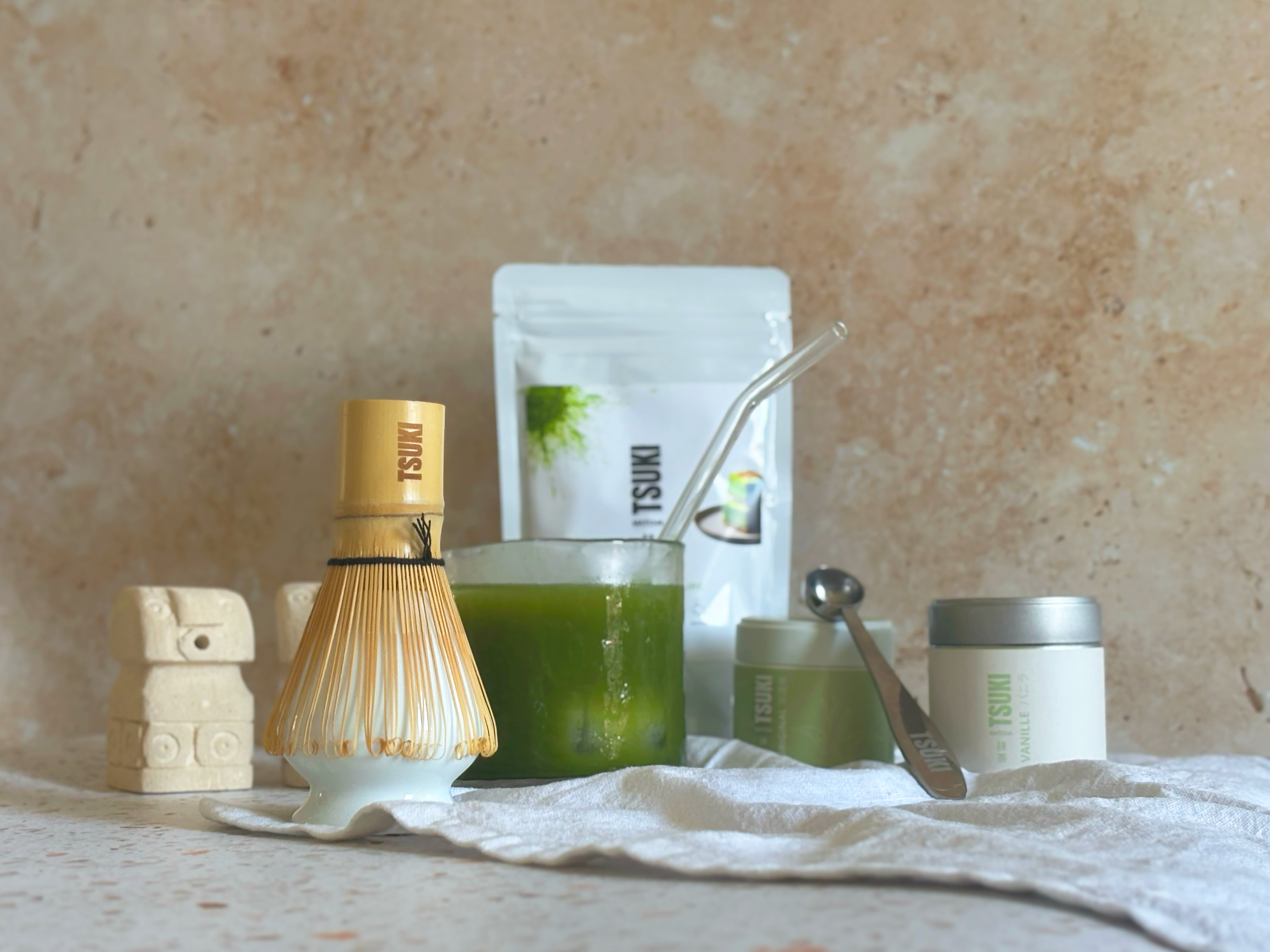

Matcha: The Ultimate Guide to Understanding Everything in 2026
Matcha is everywhere, but few people truly know what they're drinking. This comprehensive guide covers everything: what matcha is, where it comes from, how it's produced, its benefits, grades, preparation, and how to choose the right one. Enough to go from curious to enlightened enthusiast. Matcha is not a passing fad. It's a Japanese green tea powder with centuries of history behind it, now rediscovered for its taste, gentle energy, and soothing ritual. If you're just starting, this guide gives you all the basics. If you're already familiar with it, it helps you refine your choice and preparation.
Take a few minutes. By the end, you'll know exactly what to buy, how to prepare it, and why not all matchas are created equal.
What exactly is matcha?
Matcha is a finely ground green tea powder. Unlike classic tea, you don't steep leaves and then discard them. You consume the entire leaf, reduced to powder and mixed with water. This difference changes everything.

By drinking the entire leaf, you absorb all its compounds, not just the fraction that infuses into the water. This is why matcha is so concentrated in taste, energy, and nutrients. To understand what this green powder truly contains, you need to look closely at its production, which we detail below.
A powder, not an infusion
The distinction is simple but essential. Classic green tea is prepared by pouring hot water over leaves, which release some of their aromas. Matcha, however, is whisked directly into water until it forms a smooth, frothy drink. Nothing is filtered, nothing is lost.
Matcha and green tea: the same plant, a different destiny
Matcha comes from the same tea plant as most green teas, Camellia sinensis. What makes it unique is the shade-growing in the weeks leading up to harvest, followed by specific drying and grinding processes. This difference in treatment explains why matcha stands out significantly from ordinary green tea, both in taste and intensity.

Where does matcha come from? Origin and terroir
Matcha originated in China, where powdered tea had been consumed for nearly a thousand years. But it was in Japan that it found its current form, driven by the tea ceremony and craftsmanship passed down through generations.
Today, the best matcha still comes from Japan. The terroir, climate, and producers' expertise make a real difference there. Not all regions are equal, and origin remains one of the primary indicators of quality.
Japan, especially Shizuoka and Kagoshima
A few Japanese regions concentrate the bulk of quality production. Shizuoka, Japan's leading tea-producing region, and Kagoshima, further south, offer ideal conditions. Morning mists, rich soils, and a temperate climate produce soft and aromatic leaves.

Our matcha producer in Shizuoka
It is from these terroirs that trustworthy matcha originates.
The Yabukita cultivar
Behind every great matcha, there is a tea plant variety. The Yabukita cultivar is among the most renowned in Japan. It is prized for its balance of sweetness, depth, and fine vegetal aromas. The same cultivation work will yield very different results depending on the chosen cultivar.
How is matcha produced?
The quality of matcha is determined long before it reaches the bowl. It is decided in the field, then in the processing plant. Three steps make all the difference between an exceptional matcha and a mediocre powder.
Shading the tea plants
Several weeks before harvest, tea plants are covered to deprive them of direct light.

Deprived of sunlight, the plant produces more chlorophyll and amino acids. It is this step that gives matcha its smooth mouthfeel and the sought-after sweetness, far from any aggressive bitterness.
Drying into tencha
After harvesting, the leaves are steamed and then dried without being rolled. At this stage, it is called tencha. Veins and stems are removed to retain only the tenderest and most noble part of the leaf. This is the raw material that will then be ground.
Stone milling
The final step is the slowest. The tencha is ground between two slow-turning stone mills, so as not to heat the powder and preserve its aromas. One hour of grinding produces barely a few tens of grams.

This slowness explains the price of true ceremonial matcha, and the contrast with industrially produced powders.
What does matcha taste like?
It's often the big surprise for beginners. Matcha tastes like no other tea. Its flavor is intense, vegetal, and deep, with an underlying sweetness that makes it addictive once you acquire the taste.
The first sip can be disorienting, especially if you expect a classic green tea. But that's exactly what makes it so rich. Understanding its aromatic profile helps you appreciate it better and recognize a quality product.
Umami, the signature of matcha
Great matcha is distinguished by its umami, that round, savory flavor often described as the fifth taste. It comes from the amino acids concentrated by shading. The more a matcha is shaded and of higher quality, the more prominent this umami is and the more subtle the bitterness.
Bitterness and freshness
A slight bitterness is normal and even pleasant. However, an aggressive and persistent bitterness often indicates a low-grade matcha, poorly stored, or steeped at too high a temperature. When first discovering matcha, it's best to start gently to get acquainted with this unique flavor in a few minutes.
What are the benefits of matcha?
Matcha appeals as much for its taste as for its perceived effects. By consuming the entire leaf, you fully benefit from its natural compounds. Here's what can reasonably be expected, without magical promises.
Long-lasting and stable energy
Matcha contains caffeine, but it is combined with an amino acid called L-theanine. This combination provides a more gradual and sustained energy boost than coffee, without the sudden peak or subsequent crash. To compare doses precisely, it's helpful to know how much caffeine matcha actually contains.
Concentration and calm simultaneously
L-theanine promotes a state of relaxed alertness. This is what many describe as calm concentration, ideal for working or studying without nervousness. It's one of the reasons why matcha has replaced morning coffee for many enthusiasts.
Rich in antioxidants
Matcha is naturally rich in antioxidants, particularly catechins. By consuming the entire leaf, you absorb a much greater quantity than from a simple infusion. This is one of matcha's great daily health assets, to be integrated into a balanced diet.
Metabolism support
Matcha is often associated with a metabolic boost, as part of a healthy lifestyle. It doesn't work miracles on its own, but replacing a sugary drink with unsweetened matcha remains a simple and beneficial habit over time.
The different grades of matcha
Not all matchas are made for the same use. We mainly distinguish two broad categories, which correspond to different qualities and prices. Understanding this distinction helps avoid disappointment.
Ceremonial grade
This is the finest quality, derived from the first flush leaves. Ceremonial grade is drunk pure, simply whisked with water. Its sweetness, umami, and lack of pronounced bitterness make it the perfect matcha for tasting.
Culinary grade
More robust and economical, culinary grade is designed for cooking and milk-based drinks. Its stronger character holds up well against milk, sugar, or cooking. It's the right choice for daily lattes and baking.
| Criterion | Ceremonial grade | Culinary grade |
|---|---|---|
| Usage | Pure tasting | Latte, cooking, baking |
| Taste | Sweet, round, umami | More robust, vegetal |
| Leaves | First harvest | Later harvests |
| Recommended preparation | Water only, whisk | With milk or in recipes |
For more details on this comparison, the specific uses can be found in our dedicated comparison of ceremonial grade matcha versus culinary grade.
The right equipment for preparing matcha
You can start with a simple spoon, but the right equipment truly changes the texture and enjoyment. Three accessories are enough to transform preparation into a true ritual.
The bamboo whisk
The traditional whisk, called a chasen, is the key accessory. Its fine bamboo prongs aerate the powder and create that fine, creamy foam impossible to achieve otherwise.

A good bamboo matcha whisk remains the best investment for beginners.
The measuring spoon
Dosing makes all the difference between a balanced matcha and a failed bowl. A bamboo measuring spoon allows you to measure the right amount every time, without approximation.

A metallic measuring spoon also does the job very well.
The matcha bowl
Wide and deep, the traditional bowl leaves enough space for whisking without splashing.

Preparing your matcha in a real matcha bowl also adds to the pleasure of the act. To get started, a complete ritual kit combines powder and accessories in one go.
How to prepare matcha?
Preparing good matcha doesn't require any special talent, just a bit of method. A few simple steps are enough to transform powder into a smooth and frothy drink. Here are the three preparations to know.
Traditional matcha
Sift half a spoon of matcha into a bowl to avoid lumps. Add a little simmering water, never boiling, around 70 to 80 degrees Celsius. Whisk vigorously in a W shape until a fine foam is obtained. This is the purest way to taste ceremonial grade.
Matcha latte
First, prepare a concentrated matcha base, then dilute it with hot or cold milk.

Matcha latte is perfect for softening the intensity and appealing to beginners. Complete mastery of dosages and temperatures can be found in our guide to making the best homemade matcha.
Iced matcha
In summer, matcha can also be enjoyed over ice. Whisk your matcha with a little water, pour over ice cubes, then add cold water or milk.
Refreshing and energizing, it has become one of the season's signature drinks.
Good habits for successful matcha
A few details make all the difference. Always sift the powder to avoid lumps. Monitor the water temperature, which should never boil. Whisk quickly enough to create foam, and drink your matcha without waiting too long, while it's still frothy and flavorful. With these habits, a good matcha can be made in less than two minutes, every morning.
How to choose your matcha well?
Given the current offerings, it's easy to make a mistake. The best matcha in France is hard to find.
Price alone doesn't tell the whole story, and appealing packaging sometimes hides mediocre quality. Three benchmarks help you choose wisely.
Origin and transparency
Good matcha clearly indicates its Japanese origin and ideally its region. Be wary of powders without a precise origin. Traceability is the primary guarantee of a producer's seriousness.
The appropriate grade for your use
There's no need to pay for ceremonial grade just to drown it in a sugary latte, nor to cook with tasting-grade matcha. Choose according to what you intend to do with it. The full reasoning is detailed in our guide on how to choose good matcha according to your needs.
Freshness and preservation
Matcha is delicate. It is sensitive to air, light, and humidity, which quickly dull its aromas. Opt for small formats that are consumed quickly, and learn how to properly store it to preserve its freshness over the weeks.
Where to buy quality matcha?
Today, matcha can be found everywhere, from supermarkets to specialty stores and online. But availability does not equate to quality. Where you buy directly influences what you get.
Online or in store
Physical stores are reassuring, but rarely offer fresh, traceable matcha. Online, it's easier to access specialized producers, with clear information on origin and production. To calmly compare options, see our comprehensive overview to find out where to buy matcha in France.
What distinguishes premium matcha
Premium matcha is recognized by a set of clues. Precise Japanese origin, identified cultivar, clearly announced grade, stone-ground, and guaranteed freshness. This is exactly the promise of a TSUKI Japanese premium matcha carefully sourced in Shizuoka and Kagoshima, from the Yabukita cultivar.
How much does good matcha cost?
The price of matcha is often intriguing. Some powders cost a few euros, others much more. This difference is not arbitrary; it reflects real differences in quality and manufacturing.
Why such price differences
Cheap matcha generally comes from late-harvested, lightly shaded leaves, quickly machine-ground. Ceremonial grade, on the other hand, requires long shading, severe sorting, and slow stone-grinding. The human labor and very low yield justify most of the difference.
The fair price of ceremonial matcha
For authentic Japanese ceremonial grade, a reasonable price falls within a premium but accessible range, for a format designed to stay fresh. Be wary of discounted prices that almost always hide inferior quality, just as you should be of very high prices that are based solely on packaging. True value lies in the product, its origin, and its process, never in the promise alone.
Common mistakes to avoid with matcha
Many disappointments come less from the matcha itself than from how it is prepared or stored. Here are the most common pitfalls, easy to correct.
Using water that is too hot
Boiling water burns the powder and brings out bitterness. Aim for 70 to 80 degrees Celsius. Let your water cool for one minute after boiling, and the result will be much smoother.
Choosing the wrong grade


- Choosing a selection results in a full page refresh.
- Opens in a new window.