
Iced matcha latte: the refreshing 3-minute recipe
The iced matcha latte has become the signature drink of Japanese-style coffee shops and trendy cafes. Bright green, creamy, and refreshing, it can be prepared in three minutes with four ingredients.
Here is the perfect recipe, the right dosage, milk choices, mistakes to avoid, and the most successful variations (dirty matcha, matcha frappé).
Why the iced matcha latte is so popular
The iced matcha latte combines three things that always work: the freshness of an iced drink, the gentle energy of matcha (caffeine and L-theanine), and the visual appeal of its vibrant jade green contrasting with white milk.

Compared to an iced coffee, it avoids the jitters and afternoon slumps. Compared to a classic iced tea, it offers much more depth of flavor thanks to matcha's umami notes. And it's unbeatable in terms of presentation: the green-on-white gradient version remains one of the most shared images on Instagram.
Good news: the recipe is simple, quick, and requires no complex equipment. All you need is a whisk and a large glass.
Ingredients for one large glass (350 ml)
- 1.5 to 2g matcha (1 scoop, about 1 level teaspoon)
- 30 ml filtered water at 70-75 °C
- 200 ml cold milk of choice
- 5 to 10g cane sugar syrup or honey (optional)
- 4 to 6 ice cubes
A few details about matcha. For a latte, a well-sourced culinary grade matcha is more than sufficient: milk masks the fine nuances of a ceremonial grade. However, avoid dull or khaki powders sold in supermarkets: the color of the latte directly depends on it.
The 3-step recipe
Step 1 - Prepare the matcha base
Sift the matcha directly into a small bowl to prevent lumps. Pour in 30 ml of simmering water (never boiling: water that's too hot makes matcha bitter). Whisk with a bamboo chasen in a quick "W" motion for 15 to 20 seconds, until a fine, even foam is formed.
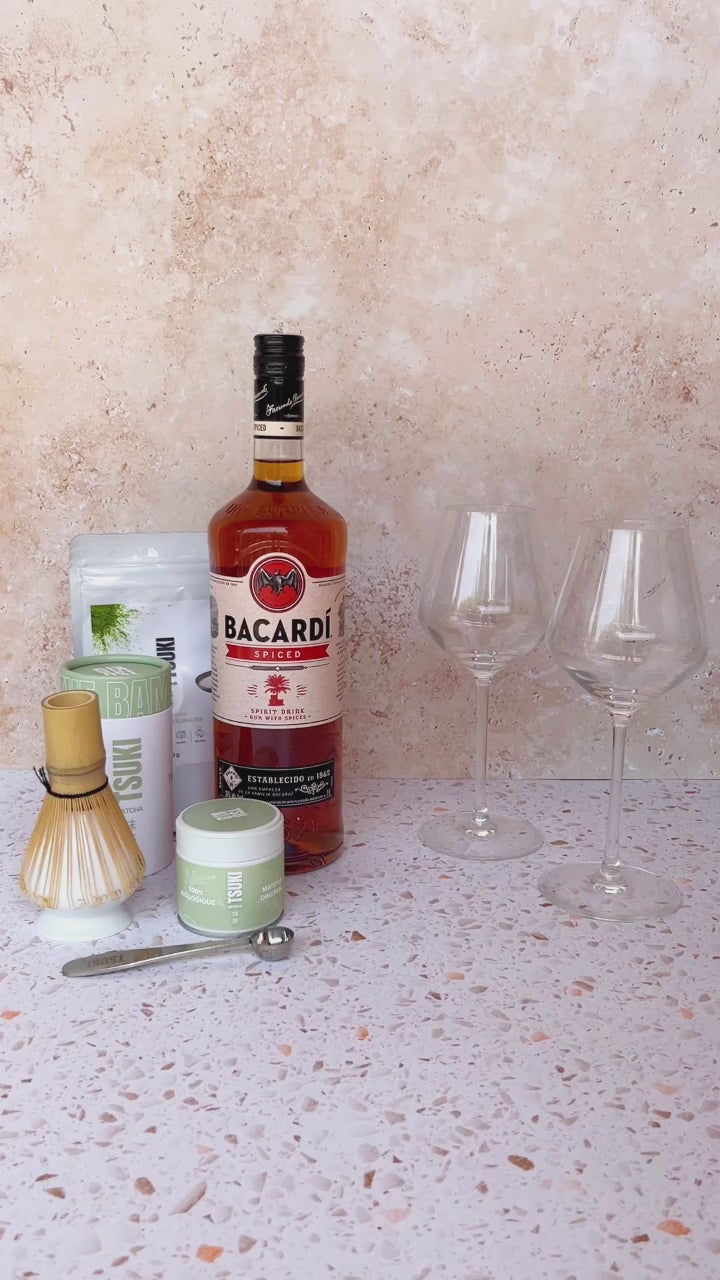
No chasen? A small electric milk frother, a tightly closed shaker, or even a vigorously shaken water bottle will do the trick. The goal is to eliminate lumps. For other options, the article on 3 methods for preparing matcha without a whisk details each alternative.
Step 2 - Assemble the glass
Fill a large glass three-quarters full with ice cubes. Pour cold milk over them, leaving about 2 cm from the rim. If you want to sweeten, add the syrup directly to the milk at this stage (cold milk doesn't dissolve powdered sugar well, a liquid syrup is better).
Step 3 - Gently pour the matcha
Slowly pour the matcha base over the milk, ideally against the side of the glass or onto an ice cube, to create the signature visual gradient.

Since matcha is slightly denser than milk, it floats on the surface for a few seconds before sinking, creating the famous green-on-white effect.
Serve with a large straw and stir just before drinking. Your latte is ready.
Which milk to choose for an iced matcha latte
The choice of milk radically changes the final taste. Here are the most used options and what they offer.
Oat milk. The favorite of coffee shops, and for good reasons. Creamy, naturally slightly sweet, it coats the matcha without masking its vegetal notes. Prefer barista versions, which are richer and blend better.
Almond milk. Lighter, more discreet. Highlights the fresh and refreshing side of matcha. Ideal for those who find other milks too rich.
Coconut milk. Brings a tropical roundness that transforms the latte into an almost dessert-like drink. Excellent in summer, with a stronger taste.
Soy milk. Neutral, protein-rich, froths well. This is the Japanese standard for matcha lattes. Light taste that gives full prominence to the matcha.
Semi-skimmed cow's milk. Creamy, classic, linked to matcha by a long tradition in pastry. Whole milk is too rich for the iced version.
To learn more, the guide "which milk to choose for your matcha lattes" compares each option with detailed tasting notes.
The 5 mistakes that ruin an iced matcha latte
Five classic mistakes can turn a great latte into a mediocre one. Easy to avoid once identified.
1. Water too hot for the base. Above 80 °C, matcha becomes bitter and loses its aromas. Aim for 70-75 °C: this is water just before simmering, or boiling water cooled for 1 minute.
2. No sifting. Matcha forms lumps that don't dissolve, even with a whisk. A fine sieve solves the problem in 5 seconds.
3. Too little matcha. Below 1.5g, the taste gets lost in the milk and ice. You get tinted milk, not a latte. The right dose for 350ml of drink: 2g.
4. Pouring matcha onto milk without caution. If you dump it all at once, it mixes immediately and you lose the gradient effect. Pour slowly against the side of the glass.
5. Melted ice cubes = diluted latte. For a latte that holds its flavor until the end, use plenty of ice cubes and drink fairly quickly. Advanced tip: freeze milk in an ice cube tray and use it instead of frozen water. The latte won't dilute as it melts.
Variations: dirty matcha, matcha frappé, and other twists

Dirty matcha latte
A shot of espresso poured over an iced matcha latte. Three-layer visual effect (white, green, brown), intense taste where coffee and matcha complement each other instead of canceling each other out. For lovers of both. Prepare the classic iced matcha latte, then pour a cooled espresso on top before serving.
Matcha frappé
Blended version. Blend 2g matcha, 200ml milk, 1 teaspoon syrup, 6 ice cubes, and 1 scoop of vanilla ice cream (optional). The result is creamier, almost milkshake-like, perfect for a sweltering day. Without vanilla ice cream, it remains a light drink.
Iced vanilla matcha latte
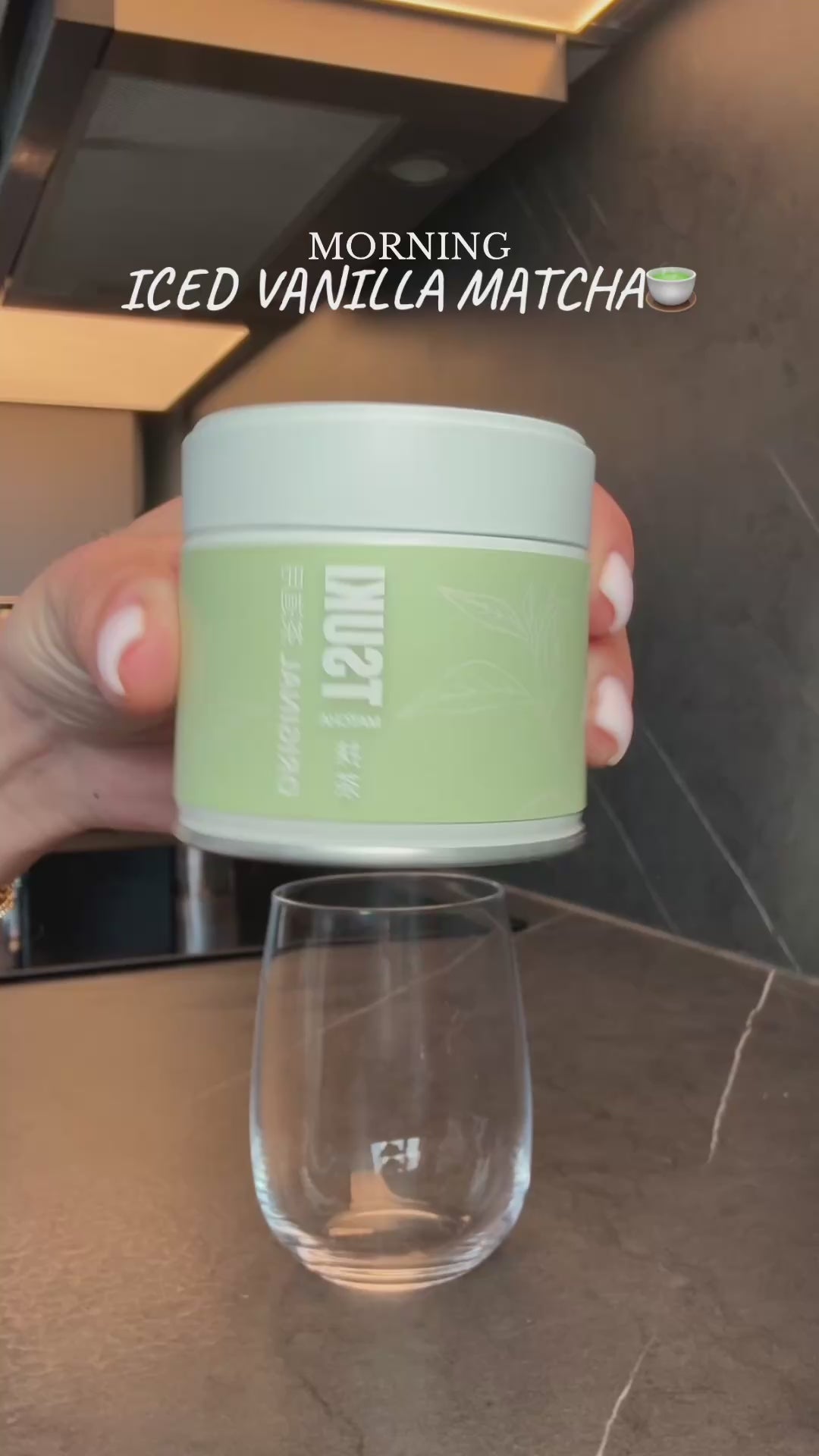
Add 1 teaspoon of natural vanilla extract to the milk before assembling the glass. Or directly use a vanilla-flavored matcha instead of pure matcha. Vanilla softens bitterness and adds a pastry-like touch that appeals even to novices.
Iced strawberry matcha latte
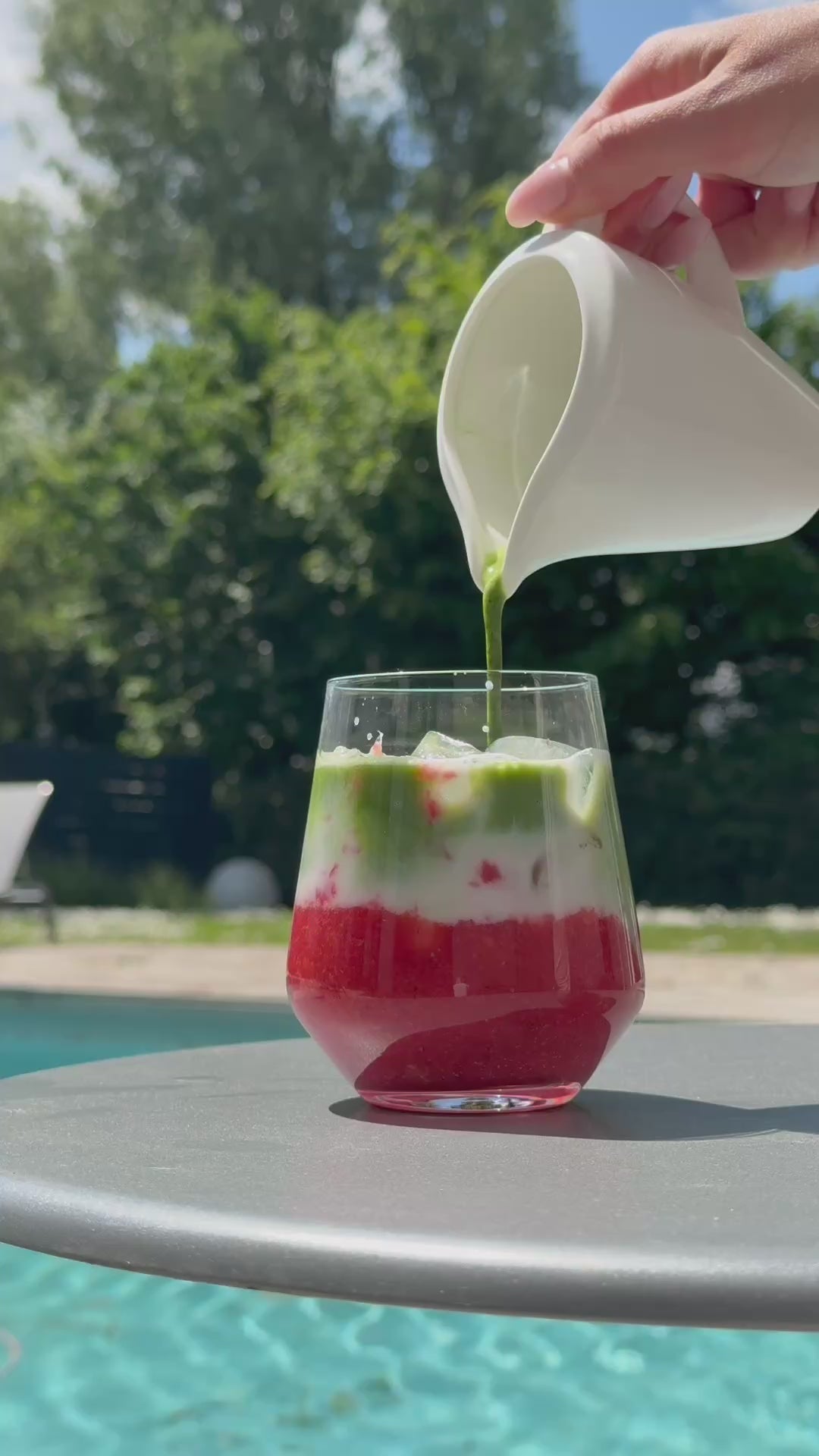
At the bottom of the glass, add 2 tablespoons of strawberry puree (or coulis). Then the ice cubes, milk, and matcha. Three layers: pink, white, green. Very Instagrammable, very good in summer.
To explore more versions, the article iced matcha latte: 5 easy recipes for summer 2026 offers a range of combinations.
Which matcha to use for an iced latte
Iced matcha latte is more forgiving than pure matcha: the milk, optional sugar, and ice soften the edges.
A quality ceremonial matcha (specified Japanese origin, vibrant green, stone-ground) is the right choice. It maintains its color in the glass, provides enough aromatic presence not to get lost in the milk, and the cost per latte remains reasonable.

Expect to pay around €0.15 to €0.25 per latte for good matcha.
For the hot version, the same logic applies: see the homemade matcha latte hot and iced recipe for the full procedure.
FAQ: iced matcha latte
How much matcha for an iced matcha latte?
2g for a large 350ml glass. This is about 1 level teaspoon, or 1 well-filled chashaku scoop. Below 1.5g, the taste gets lost in the milk and ice.
Should you sweeten an iced matcha latte?
A matter of personal taste. Pure matcha isn't bitter if it's good quality, but a touch of sugar rounds out the flavor for beginners. 5 to 10g of cane syrup is sufficient. Liquid syrup mixes better than powdered sugar in cold milk.
Can you prepare iced matcha latte in advance?
Not really. Matcha oxidizes quickly once mixed, losing its vibrant color and aroma in less than an hour. The matcha base should be prepared just before serving. However, you can prepare 4 to 5 glasses in parallel to serve several people.
What's the difference between iced matcha and iced matcha latte?
"Iced matcha" simply doesn't contain milk: it's just matcha diluted in cold water with ice cubes. Iced matcha latte adds milk, which gives it a creamy texture and rounder taste. The latter is much more popular in France.
Does iced matcha latte contain a lot of caffeine?
About 50-70mg for 2g of matcha, equivalent to a shot of espresso. But thanks to matcha's L-theanine, the effect is more stable, without peaks or sudden crashes. Ideal for an afternoon boost without jitters.
Can you make an iced matcha latte without a chasen whisk?
Yes, no problem. A mini electric frother works very well, and a closed shaker also gives excellent results. The goal is simply to eliminate lumps. The chasen remains the reference tool for foam quality, but it's not essential for the iced version.
How many calories in an iced matcha latte?
Around 100-130 kcal for a latte with oat milk and 5g of syrup. The sugar-free version with almond milk drops to 50-70 kcal. Much less than a classic sugary frappé.
In summary
A successful iced matcha latte is made with four ingredients and three steps: sift and whisk 2g of matcha with 30ml of water at 70-75 °C, assemble a glass of cold milk over ice, gently pour the matcha over the milk. The rest is about milk choice and presentation.
With vibrant green culinary matcha, barista oat milk, and a few ice cubes, you get a latte at least as good as those from coffee shops, for a fraction of the price.
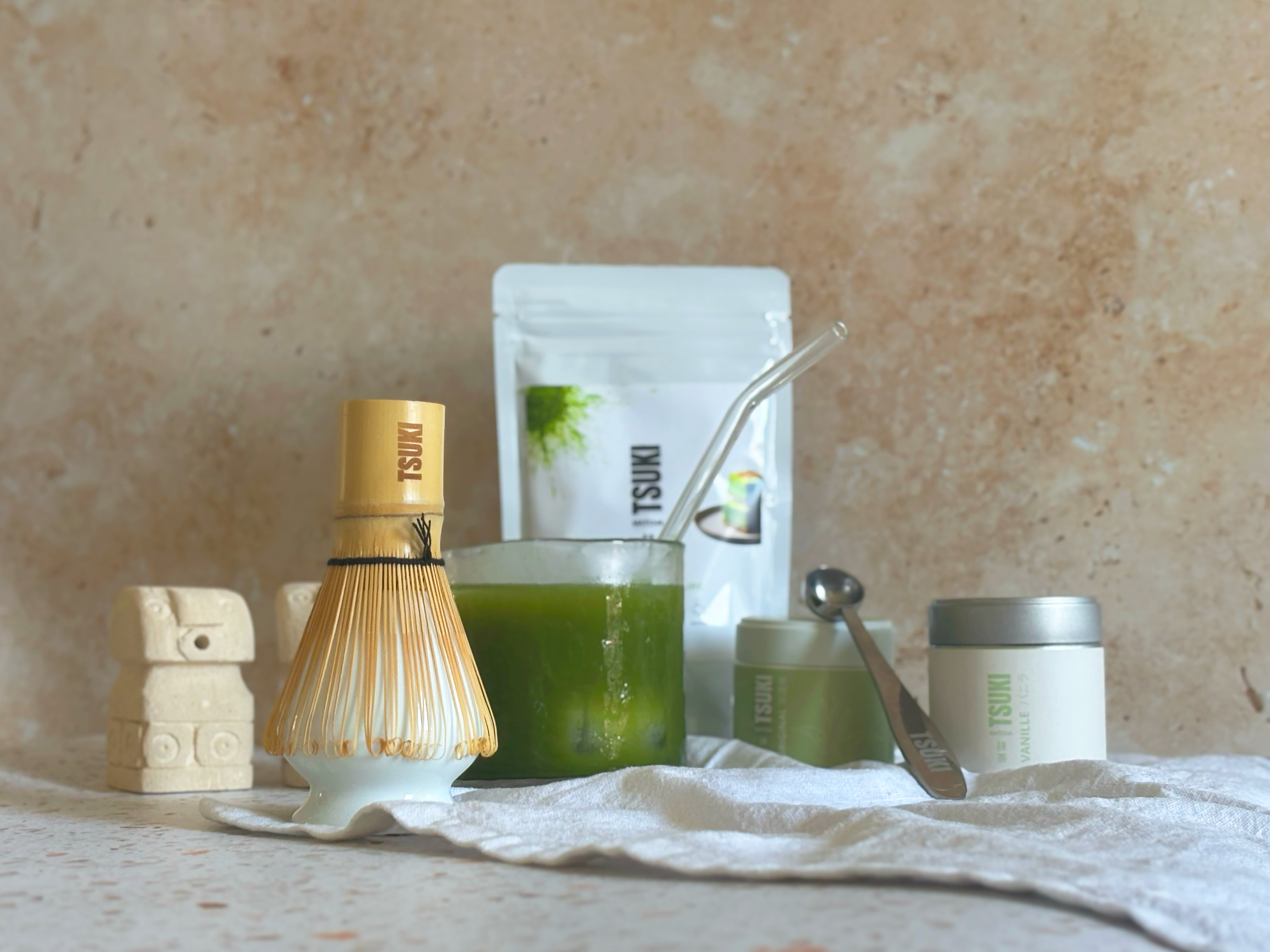
Want to try it with matcha that keeps its color in the glass? Discover the TSUKI matcha selection, sourced from Shizuoka and Kagoshima, Yabukita cultivar, stone-ground, perfect for everyday lattes.
Share