
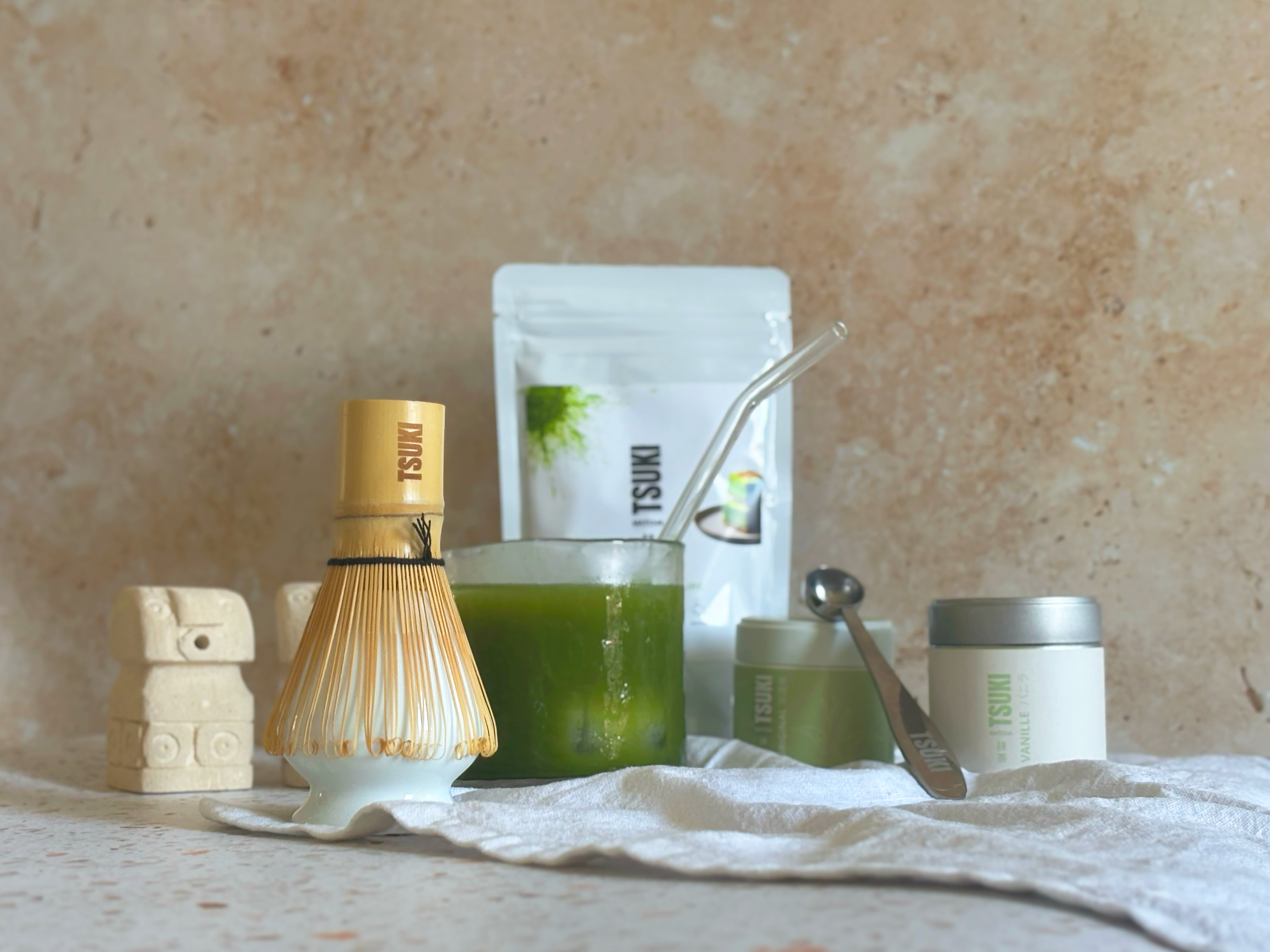
All about Matcha
Plongez dans l’univers du matcha : bienfaits, origines, recettes et astuces du quotidien.
Le matcha est bien plus qu’une simple boisson. Cette poudre fine de thé vert japonais, issue de feuilles ombragées puis finement moulues sur pierre, incarne à la fois une tradition millénaire et un superaliment moderne aux multiples bienfaits. Consommé depuis des siècles au Japon, notamment dans le cadre de la cérémonie du thé, le matcha séduit aujourd’hui pour son goût unique, sa richesse nutritionnelle et son énergie douce et durable.
Riche en antioxydants, en catéchines et en L-théanine, le matcha japonais est reconnu pour soutenir la concentration, le métabolisme, l’équilibre intérieur et la vitalité au quotidien. Que vous souhaitiez découvrir ses bienfaits, comprendre son origine, apprendre à le préparer correctement ou explorer des recettes créatives, vous trouverez ici toutes les clés pour intégrer le matcha dans votre routine.
Du matcha traditionnel dégusté en usucha aux lattes modernes, des conseils de conservation aux rituels inspirés de la culture japonaise, cette collection vous guide pas à pas pour comprendre, choisir et savourer pleinement le matcha sous toutes ses formes.

Histoire du matcha : origines, culture japonaise et traditions

Ichigo Ichie: the art of savouring the moment

Matcha in Japanese culture: more than just a drink

Shizuoka, Japan's leading matcha-producing region

Koicha & Usucha: two traditional ways of preparing matcha

Matcha: Journey through the History and Traditions of Japanese Green Tea

UMAMI : La Cinquième Saveur Qui Révolutionne la Gastronomie

Les 5 Étapes Essentielles de la Cérémonie Traditionnelle du Matcha

LE THÉ MATCHA
Originaire de Chine, le matcha est devenu une tradition majeure au Japon, notamment à travers la cérémonie du thé.
Les moines bouddhistes l’utilisaient déjà pour accompagner leur méditation.
Ses trois particularités :
C’est un thé vert en poudre que l’on fouette et non que l’on infuse, il offre des bienfaits puissants car on consomme la feuille entière, et il peut aussi être utilisé comme ingrédient en cuisine, dans des boissons comme des recettes.
Les bienfaits du thé matcha ❤️
UNE CONCENTRATION EXCEPTIONNELLE EN ANTIOXYDANTS
L’un des principaux bienfaits du matcha réside dans sa richesse remarquable en antioxydants, notamment en catéchines comme l’EGCG. Contrairement à un thé infusé, le matcha est consommé sous forme de poudre fine : on ingère donc la feuille entière. Cette particularité lui confère une concentration en polyphénols bien supérieure à celle d’un thé vert classique. Ces composés contribuent à protéger les cellules contre le stress oxydatif et participent au bon fonctionnement général de l’organisme.
UNE ÉNERGIE DOUCE ET STABLE
Le matcha contient naturellement de la caféine, mais son effet est très différent de celui du café. Grâce à la présence de L-théanine, un acide aminé développé lors de l’ombrage des feuilles, l’énergie est progressive et durable. Résultat : une stimulation sans nervosité excessive ni chute brutale. Cet équilibre unique favorise la concentration, la créativité et la clarté mentale.
UN SOUTIEN POUR LE SYSTÈME IMMUNITAIRE
Riche en vitamines et en minéraux essentiels comme le potassium, le magnésium ou encore le zinc, le matcha s’intègre parfaitement dans une routine équilibrée. Sa densité nutritionnelle en fait un allié intéressant pour soutenir les défenses naturelles, notamment lors des changements de saison.
UN ALLIÉ POUR LA PEAU
Grâce à sa forte teneur en antioxydants, le matcha contribue à lutter contre les effets du stress oxydatif sur la peau. En protégeant les cellules des radicaux libres, il participe à préserver l’élasticité cutanée et à maintenir un teint éclatant. Sa richesse en chlorophylle renforce également cette dimension “éclat naturel”.
UN PARTENAIRE DANS UNE DÉMARCHE DE GESTION DU POIDS
Le matcha est souvent associé à une routine active. Certaines études suggèrent que les catéchines, notamment l’EGCG, peuvent soutenir le métabolisme dans le cadre d’un mode de vie sain. Il ne s’agit pas d’un produit miracle, mais d’un complément intéressant lorsqu’il est associé à une alimentation équilibrée et à une activité physique régulière.
UN ÉQUILIBRE ENTRE RELAXATION ET STIMULATION
L’association unique de caféine et de L-théanine procure un double effet : stimulant et apaisant à la fois. C’est cette harmonie qui explique pourquoi le matcha était historiquement consommé par les moines bouddhistes durant la méditation. Il favorise un état d’attention calme, propice au recentrage et au bien-être.
UN THÉ ALCALINISANT ET ANTI-INFLAMMATOIRE
Le matcha s’inscrit naturellement dans une alimentation riche en végétaux. Sa composition contribue à soutenir l’équilibre acido-basique et à accompagner une démarche globale orientée vers la réduction de l’inflammation chronique liée au mode de vie moderne.

COMMENT PRÉPARER LE THÉ MATCHA ?
Préparer le thé matcha ne consiste pas simplement à mélanger une poudre à de l’eau chaude.
Ce rituel japonais repose sur quelques gestes précis qui révèlent toute la finesse du matcha : une eau à la bonne température, une poudre tamisée et un fouettage énergique pour une mousse légère et onctueuse.
Pour ce faire, nous vous conseillons d’opter pour notre matcha Original ou matcha Vanille.
En quelques minutes seulement, vous transformez votre pause en un véritable moment de calme et de concentration.
Avec un matcha de qualité et les bons accessoires, préparer son matcha à la maison devient un plaisir simple et quotidien.
Our selection of Japanese matcha


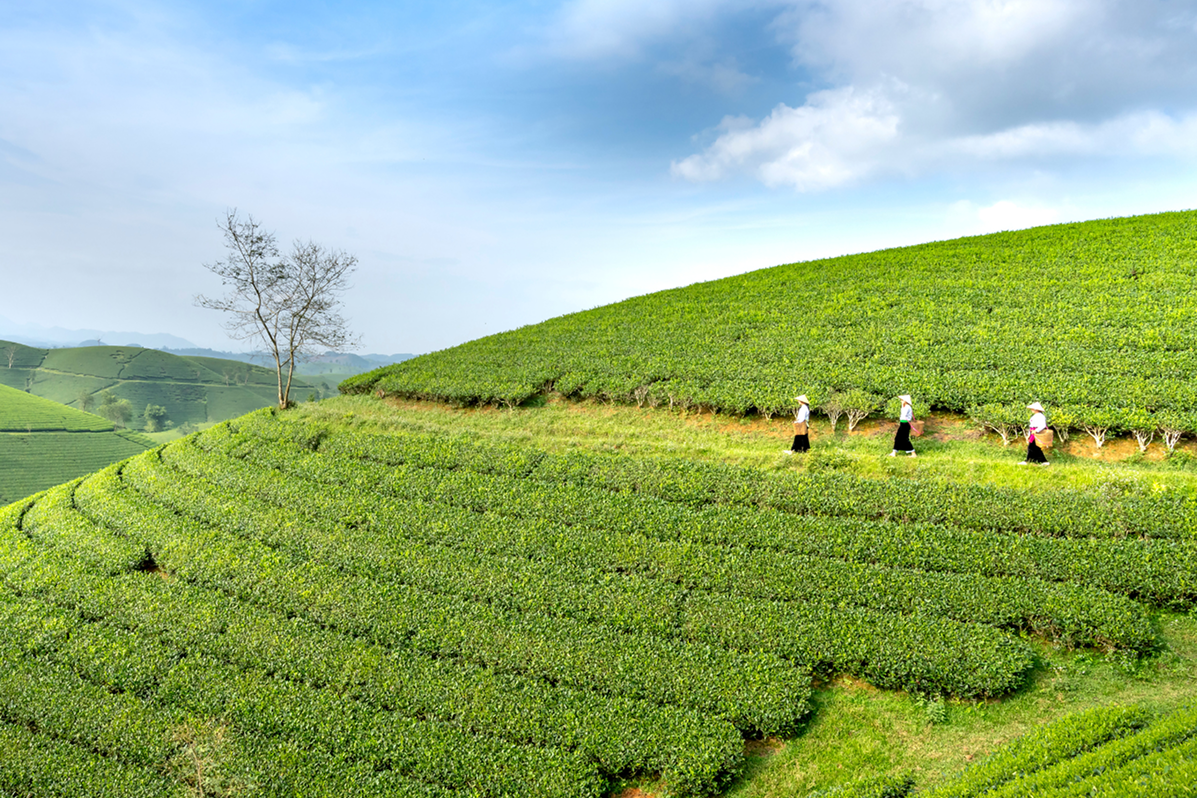
100% Japanese matcha, cultivated with respect and know-how
All our matchas come from the Yabukita cultivar, renowned for its aromatic quality and rich umami content.
The tea leaves are harvested in the Shizuoka and Kagoshima regions, renowned for their exceptional tea plantations.
Want to twist your matcha into something other than a latte? Discover all our easy recipes, sweet, savoury, to drink or enjoy - to make at home in the blink of an eye!
Recipe ideas to vary your pleasures

Matcha aromatisé : vanille, fraise, coco… quel parfum choisir ?

Iced matcha latte : 5 recettes faciles pour l'été 2026

Capsules matcha Nespresso : existent-elles vraiment?

Strawberry Matcha Beats : recette complète

Creamy Matcha Flan - TSUKI x INSTINCT