
Mango Matcha: the tropical duo for your lattes and smoothies
Mango matcha combines the vegetal freshness of Japanese green tea with the sunny sweetness of the fruit. Here's how to measure, combine, and make a successful iced latte, a creamy smoothie, or a gourmet bowl, without ever masking the taste of the matcha.
Mango is one of the few fruits round and fragrant enough to balance the noble bitterness of matcha. Where strawberry adds acidity and banana adds creaminess, mango brings a tropical sweetness that softens the tea without overpowering it. The result is a drink that is both vibrant and comforting, perfect for hot days as well as a filling breakfast.
However, it is still necessary to follow some dosing and preparation rules. A failed mango matcha is often due to too much fruit, a tea that becomes bland, or a grainy texture. This guide gives you the right proportions, two flagship recipes, and the variations that really work.
Why mango pairs so well with matcha
Matcha has a complex aromatic profile: vegetal notes, umami, slight astringency, and a fine bitterness that signifies a quality tea. Mango, on the other hand, is dominated by sugar, a mild acidity, and yellow-flesh fruit aromas. These two worlds complement each other rather than competing.
The sweetness of the mango rounds out the tea's astringency, while the freshness of the matcha prevents the fruit from becoming cloying. A natural balance is achieved, without the need to add much sugar. This is the same principle that makes the combination of matcha and summer fruits so successful, as in a creamy and tangy strawberry matcha.
In terms of color, the contrast between the orange of the mango and the green of the tea creates beautiful, very photogenic drinks, which partly explains the success of these combinations on social media.
Which matcha to choose for a mango drink
For a milky drink or a smoothie, ceremonial grade matcha remains the best choice. Its fine texture and round taste blend perfectly with milk and fruit, without aggressive bitterness. A matcha that is too culinary risks turning bitter green once drowned in mango.
The classic dosage is one scoop of matcha, or about two grams, for a single drink. If you increase the amount of fruit, slightly increase the amount of tea so that the matcha remains noticeable. A good guideline: the green should remain visible in the glass after mixing.
The quality of the powder makes all the difference in a recipe where matcha is competing with a sweet fruit. A fine and fragrant Japanese matcha stands up to mango, whereas a low-quality powder completely disappears.
| Drink | Matcha | Mango | Liquid base |
|---|---|---|---|
| Iced Latte | 2 g | 3 tbsp puree | 200 ml milk |
| Smoothie | 2 to 3 g | 150 g fruit | 120 ml plant-based milk |
| Bowl | 2 g | 100 g fruit | 80 ml yogurt or milk |
Mango Matcha Iced Latte Recipe
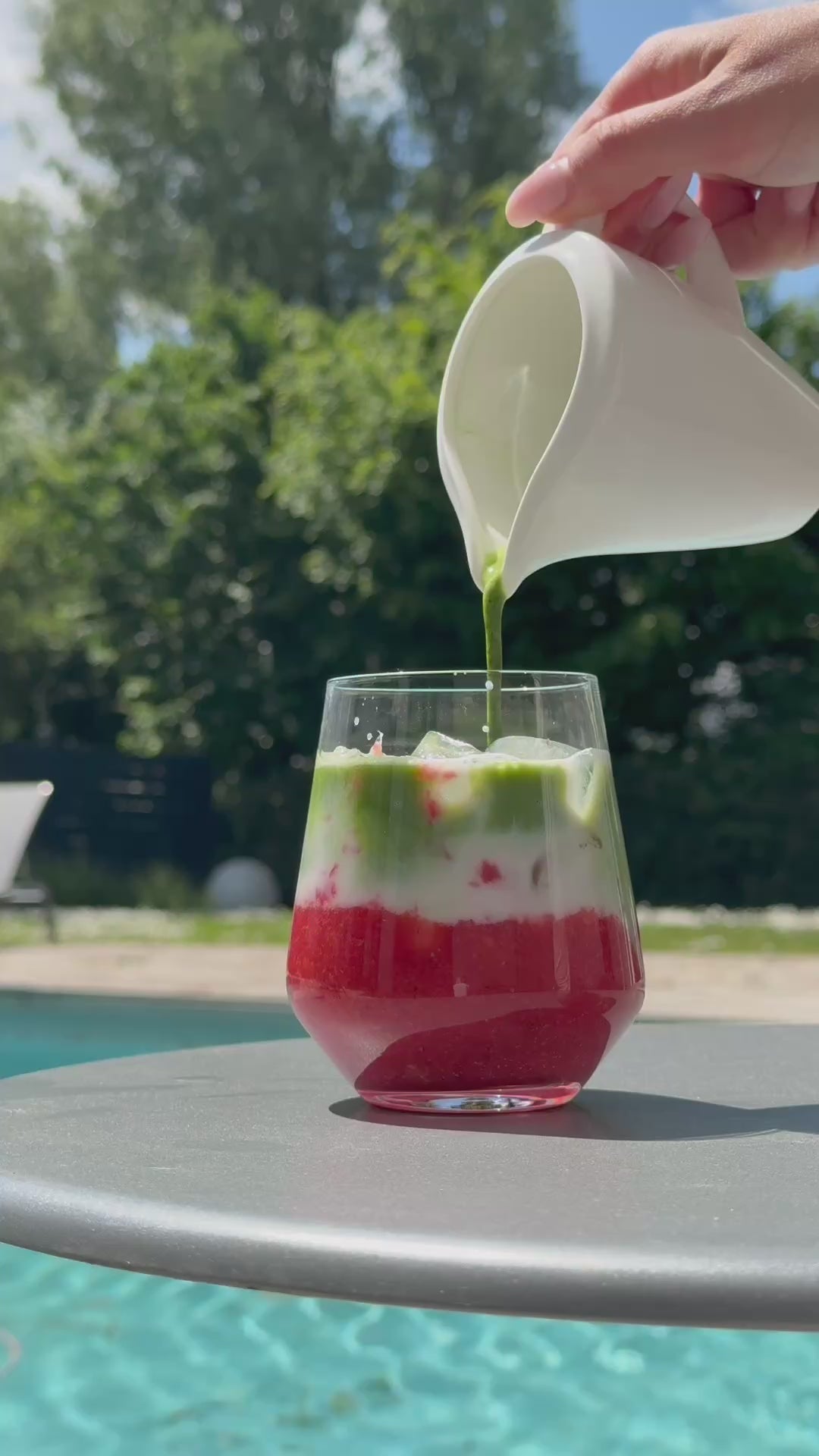
This is the most refreshing version, ideal for summer. It plays on three layers: mango puree at the bottom, milk in the middle, frothy matcha on top. This orange and green gradient is what makes the drink so charming.

Ingredients for a large glass
- 2 g matcha (one scoop)
- 50 ml hot water at 80 degrees
- 3 tablespoons ripe mango puree
- 200 ml milk of your choice
- Ice cubes
Preparation steps
Start by sifting the matcha into a bowl, pour in the hot water, and whisk in a "W" motion until you get a smooth foam. A steady motion with a bamboo whisk prevents lumps and develops a creamy texture. If you're new to this, the base of a successful iced matcha latte in three minutes will serve you for all your fruity variations.
Blend the mango into a smooth puree, pour it into the bottom of the glass. Add ice cubes, then milk. Finish by carefully pouring the matcha over the back of a spoon to maintain the layered effect. Stir before drinking.
A good quality bamboo whisk really changes the final texture. Taking care of a good bamboo whisk to emulsify the tea guarantees a dense foam that stays on top of the milk.

Mango Matcha Smoothie Recipe
More nutritious, the smoothie transforms the duo into breakfast or a snack. It's prepared all at once in a blender and can be infinitely varied according to seasonal fruits.
Ingredients
- 2 to 3 g matcha
- 150 g mango (fresh or frozen)
- 120 ml plant-based milk
- Half a banana for creaminess
- One spoon of yogurt or cottage cheese, optional
Blend all ingredients until you get a thick, homogeneous texture. The banana acts as a binder and further softens the mixture, a trick already proven in a creamy banana matcha smoothie. For a more tropical result, replace the milk with coconut milk and you get a drink in the spirit of a sunny coconut matchacolada.
Serve immediately, well chilled. A mango matcha smoothie should be enjoyed within minutes, before the foam collapses and the color fades.
Variations and combinations that work
Mango supports many combinations. Coconut remains the most obvious, for a revisited piña colada profile.

Strawberry adds acidity and a superb pink color next to the green. Passion fruit intensifies the exotic and tangy side.
For an ice cream-like dessert texture, blend frozen mango with little liquid and serve with a spoon, in the spirit of a thick and iced matcha frappé. You can also top a granola bowl with the preparation for a complete breakfast.

If you're looking for other fresh green tea drink ideas, a selection of easy iced matcha latte recipes for summer will give you plenty of variety all season long.
Mistakes to avoid
The first mistake is to drown the matcha in too much fruit. Mango is powerful: beyond three spoonfuls of puree per drink, the tea disappears. Go easy and taste before adjusting.
The second is using an unripe mango. A green fruit remains acidic and fibrous, it unbalances the drink and makes the texture grainy. Choose a mango that is soft to the touch and very fragrant, or a ready-made puree without added sugar.
The third is forgetting to sift the matcha. Without this step, the powder forms lumps that spoil the texture. A quick pass through a sieve and good whisking are enough to obtain a smooth base.
Frequently asked questions about mango matcha
Can you make mango matcha without milk?
Yes. Replace the milk with fresh water and ice cubes for a lighter and more refreshing version, similar to lemonade. The mango then provides all the roundness, without fat.
Fresh or frozen mango: what to choose?
Frozen mango is perfect for smoothies and frappés, as it thickens the texture and keeps the drink very cold. Ripe fresh mango is ideal for lattes and layered versions, where a smooth and shiny puree is desired.
Should I add sugar?
Rarely. A ripe mango is enough to sweeten the drink. If you want to sweeten it, a drizzle of agave syrup or honey pairs better than white sugar, which masks the tea's aromas.
Is mango matcha high in calories?
It all depends on the base. With water and mango, the drink remains very light. With whole milk and banana, it becomes a true nourishing breakfast. You adjust according to your goal.
Which matcha should I use to ensure the taste stands out?
A ceremonial grade matcha, fine and not too bitter, remains noticeable even when mixed with fruit. A too basic powder will be swallowed by the mango and will only leave a green color without flavor.

Want to try these recipes with a high-quality powder? Discover our collection of Japanese matchas to create your homemade fruity drinks, from iced lattes to tropical smoothies.