
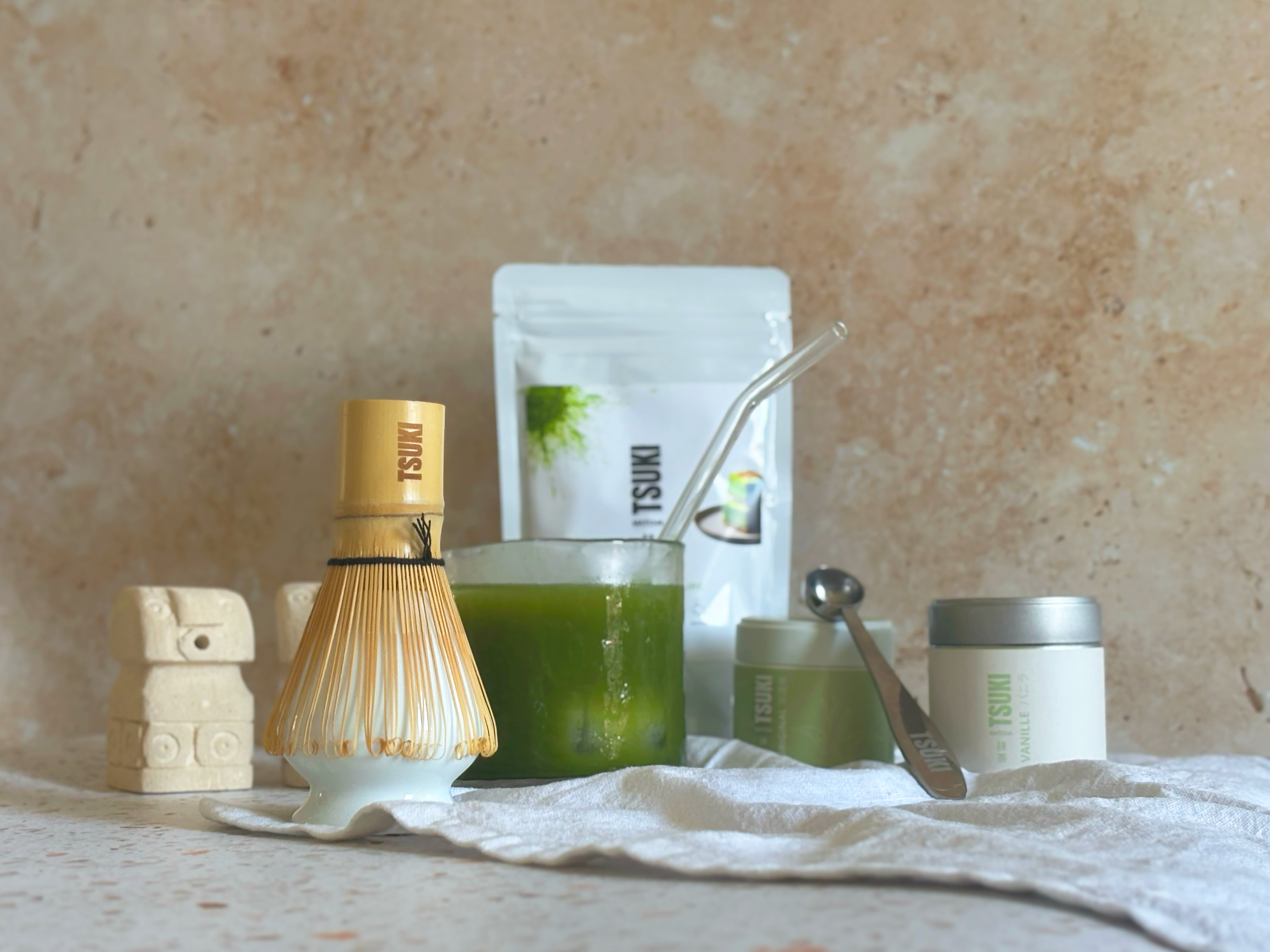

Milk and Matcha: Does milk reduce matcha's benefits?
Milk and Matcha: Does Milk Reduce Matcha's Benefits?
Adding milk to your matcha makes the drink smoother and creamier, but one question keeps coming up: does milk negate the benefits of matcha? The answer is more nuanced than a simple yes or no. Here's what science really says about milk, antioxidants, and how to prepare a matcha latte that's still good for you.
Matcha latte has become the most popular version of matcha in France. Its round texture and softened taste appeal to those who find plain matcha too vegetal or too bitter. But as soon as milk is mentioned, a concern arises: by diluting the green powder in milk, are we losing what makes it valuable?
To clarify, we need to distinguish between two things. On the one hand, what milk brings to the drink. On the other hand, what it actually modifies in the assimilation of matcha compounds.
What Milk Really Changes in a Matcha Latte
A matcha latte is matcha prepared and then diluted with milk, hot or cold. Matcha remains the active base of the drink. Milk doesn't replace it, it envelops it.
From a sensory perspective, milk rounds out the natural bitterness and astringency of the powder. The proteins and fats in milk soften the tannins, giving it that smooth mouthfeel. This is why a slightly too strong matcha goes down much better as a latte.
From a nutritional perspective, milk adds its own contributions: protein, calcium, sometimes sugar depending on the type chosen. Matcha, meanwhile, retains its gentle caffeine and L-theanine, which are not degraded by the presence of milk. The stable, non-spiking energy associated with matcha is therefore still present in a latte.
The real debate is not about caffeine or energy. It's about antioxidants.
Does Milk Reduce the Absorption of Matcha Antioxidants?
This is the crux of the matter. Matcha is renowned for its richness in catechins, a family of antioxidants, the most famous of which is EGCG. These molecules are at the heart of the studied health effects of matcha. The fear is simple: by adding milk, are we preventing the body from benefiting from these antioxidants?
Catechins and Casein: What Happens in the Cup
Casein is the main protein in milk. It has the ability to bind to polyphenols, including catechins. When milk meets matcha, some of the catechins bind to these proteins. Some solution studies have measured a decrease in antioxidant activity of about 11 to 27% when tea is mixed with milk.
On paper, this may seem significant. But two nuances completely change the interpretation of this figure.
EGCG, the least affected molecule
First nuance: this decrease mainly concerns small catechins such as EGC and EC. EGCG, which is the most valuable and abundant molecule in matcha, is larger and much less sensitive to casein. It is precisely the compound to which the majority of matcha's antioxidant power is attributed, which therefore remains largely preserved.
Second nuance: research results do not all point in the same direction. Some studies have observed no significant difference in the actual absorption of catechins after adding milk. Others even suggest that milk proteins could prolong the presence of EGCG in the body, by releasing the molecule more gradually.
In other words, milk does not destroy matcha's antioxidants. It slows down or slightly reduces a portion of them, without erasing the main benefit. A matcha latte remains a drink rich in antioxidants, far ahead of most sugary alternatives.

Animal or Plant Milk: What Impact on Benefits
All concerns about antioxidants primarily relate to casein, and therefore cow's milk. Plant-based milks do not contain casein, which changes the game depending on the milk chosen.
The choice of milk influences both the taste, texture and nutritional contribution of the drink. Here are the main trends to know.
| Type of Milk | Effect on Antioxidants | What it Provides |
|---|---|---|
| Cow's milk | Slight binding of small catechins by casein | Protein, calcium, very creamy texture |
| Oat milk | No casein, antioxidants minimally impacted | Creaminess, mild taste, very good foam |
| Almond milk | No casein, antioxidants minimally impacted | Light, low calorie, plant-based note |
| Coconut milk | No casein, antioxidants minimally impacted | Richness, gourmet notes, richer |
If your priority is to preserve catechins as much as possible, a plant-based milk adapted to your matcha latte avoids the casein question. If you are mainly looking for protein and calcium intake, cow's milk remains interesting, as the decrease in antioxidants is moderate.
How to Retain Maximum Benefits in Your Matcha Latte
The quality of the powder matters much more than the presence of milk. A matcha low in antioxidants to begin with will never become a rich drink, with or without milk. So everything starts with the powder.
Ceremonial grade matcha, bright green and finely ground, contains more catechins and L-theanine than average quality matcha. Choosing a matcha rich in antioxidants from the start is the first lever to fully enjoy your latte.
A few simple steps also help preserve matcha compounds. Do not pour boiling milk directly onto the powder, as excessive heat can degrade some of the catechins. First, prepare your matcha with water around 70 to 80 degrees, whisk, then add warm or cold milk. This method also protects the taste and avoids bitterness.
Finally, monitor added sugar. It is often sugar, more than milk, that transforms an interesting drink into a liquid dessert. A low-sugar matcha latte retains all the benefits of matcha as a gentle and energizing drink compared to coffee, without unnecessary overload.
Frequently Asked Questions
Does milk completely cancel out the benefits of matcha?
No. Milk can slightly reduce the activity of some catechins, especially smaller ones, but EGCG, matcha's main antioxidant, remains largely preserved. A matcha latte remains a drink rich in antioxidants.
Is plant-based milk better than cow's milk for a matcha latte?
To preserve antioxidants, plant-based milks have the advantage of not containing casein. Cow's milk, however, provides more protein and calcium. The best choice therefore depends on your objective, including taste and texture.
Does matcha latte contain as much caffeine as plain matcha?
Yes, milk does not alter the caffeine content. A matcha latte provides the same stable energy, driven by the synergy between caffeine and L-theanine, regardless of the amount of milk added.
Should you avoid heating milk to avoid losing benefits?
Above all, avoid excessive heat. Prepare the matcha with water at 70 or 80 degrees, then add warm rather than boiling milk. Too much heat can degrade some catechins and accentuate bitterness.
Is matcha latte good for digestion?
For many, milk softens matcha and makes it more comfortable on an empty stomach. Each person reacts differently, and knowing the link between matcha and digestive comfort helps to find the right dosage for oneself.
How many matcha lattes can you drink per day?
One to two per day is suitable for most adults. As with any caffeinated beverage, it is ideal to listen to your body and monitor sugar rather than the amount of milk.
Want to fully enjoy the benefits of matcha, in a latte or plain? Discover our selection of premium Japanese origin matchas and create the matcha latte that suits you.


