
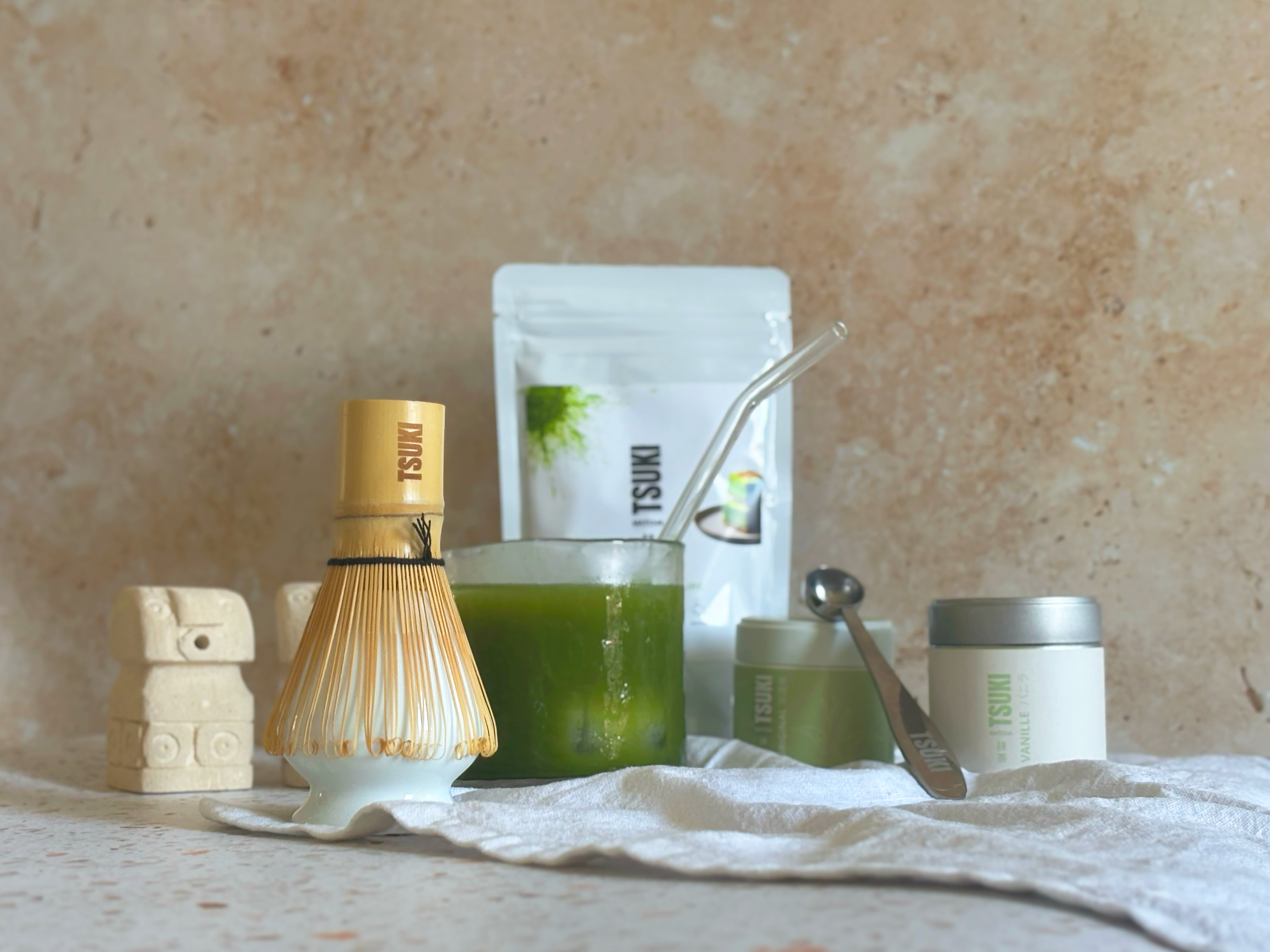
Everything about Matcha

Dive into the world of matcha: benefits, origins, recipes, and daily tips.

Matcha is much more than just a drink. This fine Japanese green tea powder, made from shaded leaves and then finely stone-ground, embodies both a millennia-old tradition and a modern superfood with multiple benefits. Consumed for centuries in Japan, particularly as part of the tea ceremony, matcha is now popular for its unique taste, nutritional richness, and gentle, sustained energy.

Rich in antioxidants, catechins, and L-theanine, Japanese matcha is known for supporting concentration, metabolism, inner balance, and daily vitality. Whether you want to discover its benefits, understand its origin, learn how to prepare it correctly, or explore creative recipes, here you will find all the keys to integrate matcha into your routine.

From traditional usucha matcha to modern lattes, from storage tips to rituals inspired by Japanese culture, this collection guides you step-by-step to understand, choose, and fully enjoy matcha in all its forms.

Macha thé : c'est quoi exactement, et quelle est la différence avec le matcha ? - Tsuki Matcha

Matcha tea: what exactly is it, and how does it differ from matcha?

on Jun 27 2026
Macha and matcha both refer to the same Japanese green powder. We explain the spelling, grades, and how to choose the right matcha tea.
Matcha : le guide ultime pour tout comprendre en 2026 - Tsuki Matcha

Matcha: The Ultimate Guide to Understanding Everything in 2026

on Jun 25 2026
Matcha is not a passing fad. This comprehensive guide covers everything about matcha: its origin, benefits, grades, preparation, and purchase, to help you make the right choice.
Astringence et amertume dans le matcha : comprendre le goût pour mieux choisir - Tsuki Matcha

Astringency and Bitterness in Matcha: Understanding the Taste for Better Selection

on Jun 23 2026
Matcha's astringency and bitterness often intrigue beginners. Here's where they come from, what they reveal about quality, and how to tame them.
Matcha boisson : tout savoir avant de vous lancer - Tsuki Matcha

Matcha Drink: All You Need to Know Before You Start

on Jun 23 2026
Everything you need to know about matcha as a drink: its forms, its differences from classic green tea, and the best ways to prepare it to get started.
Chlorophylle et matcha : pourquoi la poudre verte est si riche en chlorophylle - Tsuki Matcha

Chlorophyll and matcha: why green powder is so rich in chlorophyll

on Jun 19 2026
Matcha is one of the most chlorophyll-dense food sources. Why its green color is a quality marker, and what difference it makes for taste and health.
L-théanine : l'acide aminé du matcha qui change tout pour le focus - Tsuki Matcha

L-theanine: the matcha amino acid that's a game-changer for focus

on Jun 19 2026
L-theanine is the amino acid that sets matcha apart from all other caffeinated beverages. Effects on focus, synergy with caffeine, dosage, and benefits.
Bienfaits du matcha : ce que dit vraiment la science - Tsuki Matcha

Matcha benefits: what science really says

on Jun 17 2026
What do scientific studies say about matcha? Antioxidants, L-theanine, concentration, skin, metabolism: a look at the documented benefits of matcha.
Thé vert gunpowder : origine, bienfaits et préparation - Tsuki Matcha

Gunpowder green tea: origin, benefits, and preparation

on Jun 09 2026
Gunpowder is a Chinese green tea recognizable by its leaves rolled into small pellets. Origin, benefits, and preparation to discover it well.
Thé chai : origine, épices et recette du chai latte maison - Tsuki Matcha

Chai tea: origin, spices, and homemade chai latte recipe

on Jun 09 2026
Chai is the quintessential Indian spiced tea. Origin, spice blend, homemade chai latte recipe, and variations to try.
Thé Earl Grey : origine, bienfaits et comment bien le préparer - Tsuki Matcha

Earl Grey Tea: Origin, Benefits, and How to Prepare It Perfectly

on Jun 09 2026
Earl Grey is one of the most well-known black teas in the world. Its secret: bergamot essential oil. Origin, benefits, recipe, and its place in the world of tea.
Thé noir : bienfaits, composition et comparatif avec le matcha - Tsuki Matcha

Black Tea: Benefits, Composition, and Comparison with Matcha

on Jun 09 2026
Black tea is the most consumed tea in the world. Composition, benefits, caffeine, and an honest comparison with matcha to help you choose between the two.
Genmaicha : le thé au riz grillé japonais, bienfaits et recette - Tsuki Matcha

Genmaicha: Japanese Roasted Rice Green Tea, Benefits and Recipe

on Jun 09 2026
Genmaicha is a Japanese green tea blended with toasted and puffed rice. Discover its origin, benefits, and how to prepare it.
Golden latte : recette, bienfaits et pourquoi c'est la boisson anti-stress du moment - Tsuki Matcha

Golden latte: recipe, benefits and why it's the anti-stress drink of the moment

on Jun 09 2026
Golden latte, or "golden milk," is a hot turmeric drink popularized for its anti-inflammatory benefits. Recipe, benefits, and comparison with matcha latte.
Hojicha : qu'est-ce que c'est, bienfaits et comment le préparer - Tsuki Matcha

Hojicha: What it is, its benefits, and how to prepare it

on Jun 09 2026
Hojicha is a roasted Japanese green tea, mild and low in caffeine. Discover its profile, benefits, and how to prepare it properly.
Thé vert, hojicha, matcha, chai : quel thé choisir selon vos envies ? - Tsuki Matcha

Green tea, hojicha, matcha, chai: which tea to choose according to your desires?

on Jun 09 2026
The tea aisle has exploded in recent years. Japanese green teas, roasted infusions, spiced lattes, caffeine-free alternatives: the offering is wider than ever, and the choice can quickly become confusing. This comparison reviews the main families of teas and hot alternatives to coffee, with a simple goal: to help you find the one that truly matches your profile. What each tea truly offers you Before diving into the details, here's a quick overview of the main families compared in this guide. Green tea is the base for almost all Japanese teas. It comes in dozens of varieties, from sencha to gyokuro, including gunpowder with pearl-rolled leaves, with very different profiles depending on origin and processing. Hojicha is a roasted green tea, low in caffeine, with a grilled and caramelized taste. It's a gentle alternative, perfect for evenings or for those sensitive to caffeine. Matcha is a finely ground green tea powder, consumed whole rather than infused. It concentrates the nutrients of green tea and provides stable energy thanks to the combination of caffeine and L-theanine. Chai is an Indian blend based on black tea and spices, cinnamon, ginger, cardamom. A warm, comforting profile, very different from Japanese teas. Golden latte is not a tea but a drink based on turmeric and plant-based milk. Zero caffeine, mild spicy profile, popularized as a wellness alternative. Green tea: the basis of everything Green tea comes from the Camellia sinensis plant, like all teas. What distinguishes it is the processing method: the leaves are quickly heated after harvesting to prevent oxidation, which preserves their green color and antioxidants. In Japan, sencha accounts for over 80% of production. It is the daily green tea, fresh and vegetal. Gyokuro is an exceptional variety, shaded before harvest, softer and richer in L-theanine. Gunpowder, rarer in Japan but common in China, has rolled leaves that unfurl upon infusion. Green tea is perfect for those seeking a light, refreshing drink with moderate caffeine, 20 to 30 mg per cup. It is also a good starting point before exploring more concentrated versions like matcha, as detailed in the benefits of green tea and its difference from matcha. Hojicha: Japanese tea for quiet evenings Hojicha is a green tea, usually bancha or late-season sencha, which undergoes a high-temperature roasting step. This roasting completely transforms its profile: the color turns brown, and the taste acquires grilled, caramelized, almost nutty notes. Crucially, roasting degrades a large part of the caffeine. A cup of hojicha generally contains 5 to 10 mg of caffeine, ten times less than coffee. It is one of the few teas that can be drunk at the end of the day without risking sleep disruption. Choosing between an evening hojicha and a morning matcha primarily comes down to deciding on the desired time and effect. It's the ideal tea for those who love roasted flavors, similar to coffee, but without the caffeine, or for a comforting hot drink after dinner. Genmaicha: roasted rice tea, mild and approachable Genmaicha is a traditional Japanese blend of green tea and puffed, roasted rice grains. Originally an everyday tea, it is now appreciated for its unique profile. The taste is round, slightly nutty, with an almost roasted corn touch. Caffeine is moderate, as the green tea is diluted by the rice. It's an excellent entry point for those who find pure green tea too grassy. Its preparation is simple, water around 80°C and 1 to 2 minutes of infusion, and it forgives small temperature errors. Chai: the warming spiced drink Chai comes from India and traditionally refers to a blend of black tea, milk, sugar, and spices—cinnamon, cardamom, ginger, cloves, black pepper. The word chai simply means tea in Hindi, but in the West, it refers to this specific spiced preparation. The modern Western version, chai latte, is served in most coffee shops. Moderate to high caffeine, 30 to 60 mg depending on the black tea base, warm and complex taste, a very comforting feeling in winter. It's a drink that is more like a dessert than a light tea, ideal for those who like warm and spicy profiles. The golden latte: the caffeine-free wellness trend The golden latte is not technically a tea. It's a drink made from turmeric, plant-based milk (often coconut or oat), and complementary spices like ginger, black pepper, and sometimes cardamom. Black pepper is not insignificant: it improves the absorption of curcumin, the main active compound in turmeric. Zero caffeine, mild spicy profile, intense yellow color hence the name golden. It is the ideal drink for those who want to completely cut out coffee and tea, while maintaining a hot drink ritual in the morning or evening. Its positioning is clearly wellness, often associated with anti-inflammatory benefits linked to turmeric. Matcha: when you want the best of both worlds Matcha holds a unique place in this ecosystem. Unlike other teas, it is not infused: the entire leaf is ground into an ultra-fine powder and consumed whole in the drink. You thus absorb 100% of the nutrients, not just those that diffuse into hot water. This concentration explains matcha's exceptional richness in chlorophyll, antioxidants, particularly EGCG, and L-theanine, the amino acid that gives matcha its calm alertness effect. The caffeine in matcha, 30 to 70 mg per cup, is released gradually over 3 to 6 hours thanks to L-theanine, without the peak or crash of coffee. Matcha is also deeply linked to the cultural history of Japan: originally used by Buddhist monks to stay focused during meditation, it later gave rise to the tea ceremony. It is now found at the heart of the Japanese tea time, from sencha to matcha. Practically speaking, matcha adapts to all formats. In its traditional version, hot water and a bamboo whisk, it offers a pure and concentrated experience. In a matcha latte, it becomes a gourmet and accessible drink. The TSUKI Japanese premium matcha collection covers daily, ceremonial, latte, and culinary uses, with complete traceability of its Japanese origin. How to choose based on your profile Tea / drink Caffeine Taste Ideal for Preparation Green tea Moderate (20 to 30 mg) Fresh, vegetal Light daily drink Low Hojicha Very low (5 to 10 mg) Grilled, caramelized Evenings, caffeine sensitivity Low Matcha Moderate to high (30 to 70 mg) Umami, slight bitterness Stable energy, intense taste Medium (whisk) Chai Moderate to high (30 to 60 mg) Spicy, warm, complex Gourmet profile, winter Medium to high Golden latte Zero Mildly spicy, earthy Evening, caffeine withdrawal Low to medium Genmaicha Low (15 to 20 mg) Round, roasted rice Beginners, meals Low A typical day, tea after tea The best use of these beverages is not to choose just one, but to rotate them according to the time of day. In the morning, a matcha provides stable energy without jitters. In the middle of the day, a sencha or genmaicha brings lightness and pairs well with a meal. In the late afternoon, a green tea remains reasonable in terms of caffeine. In the evening, everything changes: switch to a roasted hojicha or a golden latte, both with no noticeable impact on sleep. This alternation covers the entire day while keeping caffeine under control. Frequently Asked Questions Which tea best replaces coffee? Matcha is the closest alternative to coffee in terms of energy, but without the drawbacks: gastric acidity, peak then crash. For a spicy and warm profile, chai is the most gourmet option. Hojicha, on the other hand, replaces evening coffee thanks to its roasted profile and very low caffeine. Which tea is the mildest to start with? Genmaicha and hojicha are the two most accessible Japanese teas. Their round and roasted profile avoids the sometimes off-putting bitterness of a pure sencha. To enter the world of matcha, an oat milk matcha latte remains the gentlest approach. What's the difference between green tea and matcha? Green tea is steeped: hot water is passed through the leaves, which are then discarded. Matcha is ground into a powder and drunk whole: 100% of the leaf's content is absorbed. For an equivalent dose, matcha therefore contains significantly more antioxidants, chlorophyll, and L-theanine. Does hojicha contain caffeine? Yes, but in very small quantities. High-temperature roasting degrades most of it. A cup contains an average of 5 to 10 mg, compared to 80 to 100 mg for coffee. Can you drink several different teas throughout the day? Yes, and it's even a good practice. Matcha in the morning for stable energy, green tea or genmaicha in the middle of the day for lightness, then hojicha or golden latte in the evening for zero impact on sleep. If matcha seems like the best compromise between taste, energy, and benefits, discover the complete TSUKI Matcha collection: Japanese sourcing, Yabukita cultivar, stone-ground.
Matcha Nature & Découvertes, Monoprix, La Vie Claire : que valent les matchas des enseignes spécialisées ? - Tsuki Matcha

Matcha Nature & Découvertes, Monoprix, La Vie Claire: How good are the matchas from specialized retailers?

on Jun 05 2026
Matcha Nature & Découvertes, Naturalia, Monoprix, La Vie Claire, Grand Frais: we compare matcha teas from specialized stores to help you choose
Matcha et digestion : bienfaits et précautions pour l'intestin - Tsuki Matcha

Matcha and Digestion: Benefits and Precautions for Gut Health

on Jun 05 2026
Matcha Nature & Découvertes, Naturalia, Monoprix, La Vie Claire, Grand Frais: we compare matchas from specialized retailers to help you choose.
Calendrier de l'avent matcha : le cadeau tendance pour les amateurs de thé vert - Tsuki Matcha

Matcha Advent Calendar: The Trendy Gift for Green Tea Lovers

on Jun 04 2026
Matcha Advent Calendar: what it contains, how to choose the right one, and why it's the trendy gift for Japanese green tea lovers.
Fouet matcha en bambou : guide d'achat, utilisation et entretien - Tsuki Matcha

Bamboo matcha whisk: buying guide, use, and care

on Jun 04 2026
Everything you need to know about the bamboo matcha whisk: choosing the right chasen, recognizing quality, using it correctly, and maintaining it for longevity.
Matcha premium : qu'est-ce que ça veut dire vraiment ? - Tsuki Matcha

Premium matcha: what does that really mean?

on Jun 03 2026
"Premium matcha" has no official definition. 6 objective criteria to recognize a true high-quality matcha and avoid empty marketing.

Showing 100/182

Matcha tea

Originally from China, matcha has become a major tradition in Japan, particularly through the tea ceremony. Buddhist monks already used it to accompany their meditation.

Its three specific characteristics

It's a powdered green tea that is whisked, not steeped. It offers powerful benefits because the entire leaf is consumed, and it can also be used as an ingredient in cooking, in drinks as well as in recipes.

How do you prepare matcha tea?

Preparing matcha tea is not just about mixing a powder with hot water.

This Japanese ritual relies on a few precise steps that reveal all the subtlety of matcha: water at the right temperature, sifted powder, and energetic whisking for a light and creamy foam.

To do this, we recommend choosing our Original matcha or Vanilla matcha.

In just a few minutes, you can transform your break into a true moment of calm and concentration.

With quality matcha and the right accessories, preparing your matcha at home becomes a simple, daily pleasure.

100% Japanese matcha, cultivated with respect and expertise

All our matchas come from the Yabukita cultivar, known for its aromatic quality and rich umami.

The tea leaves are harvested in the Shizuoka and Kagoshima regions, renowned for their exceptional tea plantations.

The benefits of matcha tea ❤️

An exceptional concentration of antioxidants

One of the main benefits of matcha is its remarkable richness in antioxidants, particularly catechins like EGCG. Unlike infused tea, matcha is consumed as a fine powder, meaning the entire leaf is ingested. This peculiarity gives it a much higher concentration of polyphenols than classic green tea. These compounds help protect cells against oxidative stress and contribute to the overall proper functioning of the body.

A gentle and steady energy

Matcha naturally contains caffeine, but its effect is very different from that of coffee. Thanks to the presence of L-theanine, an amino acid developed during leaf shading, the energy is gradual and long-lasting. The result: stimulation without excessive nervousness or a sudden crash. This unique balance promotes concentration, creativity, and mental clarity.

Immune system support

Rich in essential vitamins and minerals such as potassium, magnesium, and zinc, matcha fits perfectly into a balanced routine. Its nutritional density makes it an interesting ally for supporting natural defenses, especially during seasonal changes.

An ally for the skin

Thanks to its high content of antioxidants, matcha helps combat the effects of oxidative stress on the skin. By protecting cells from free radicals, it helps preserve skin elasticity and maintain a radiant complexion. Its richness in chlorophyll also reinforces this "natural glow" dimension.

A partner in a weight management journey

Matcha is often associated with an active routine. Some studies suggest that catechins, especially EGCG, may support metabolism as part of a healthy lifestyle. It is not a miracle product, but an interesting supplement when combined with a balanced diet and regular physical activity.

A balance between relaxation and stimulation

The unique combination of caffeine and L-theanine provides a dual effect: it is both stimulating and soothing. This harmony explains why matcha was historically consumed by Buddhist monks during meditation. It promotes a state of calm alertness, conducive to refocusing and well-being.

An alkalizing and anti-inflammatory tea

Matcha naturally fits into a plant-rich diet. Its composition helps support acid-base balance and contributes to a holistic approach aimed at reducing chronic inflammation associated with modern lifestyles.