
Everything about Matcha

Dive into the world of matcha: benefits, origins, recipes, and daily tips.

Matcha is much more than just a drink. This fine Japanese green tea powder, made from shaded leaves and then finely stone-ground, embodies both a millennia-old tradition and a modern superfood with multiple benefits. Consumed for centuries in Japan, particularly as part of the tea ceremony, matcha is now popular for its unique taste, nutritional richness, and gentle, sustained energy.

Rich in antioxidants, catechins, and L-theanine, Japanese matcha is known for supporting concentration, metabolism, inner balance, and daily vitality. Whether you want to discover its benefits, understand its origin, learn how to prepare it correctly, or explore creative recipes, here you will find all the keys to integrate matcha into your routine.

From traditional usucha matcha to modern lattes, from storage tips to rituals inspired by Japanese culture, this collection guides you step-by-step to understand, choose, and fully enjoy matcha in all its forms.

Cérémonie du thé matcha : guide immersif du rituel japonais - Tsuki Matcha

Matcha Tea Ceremony: An Immersive Guide to the Japanese Ritual

on Apr 05 2026
Beyond the technical steps, the matcha tea ceremony is a philosophy of life. Wabi-sabi, ichigo ichie, mindfulness: discover how this Japanese ritual can transform your daily life.
Le matcha, c'est quoi ? Tout savoir en 5 minutes - Tsuki Matcha

What is matcha? Everything you need to know in 5 minutes

on Apr 05 2026
Matcha is a Japanese green tea powder that is consumed whole. Definition, production, benefits, preparation, and selection: understand it all in 5 minutes.
Matcha collagène : bienfaits, recette et notre avis - Tsuki Matcha

Matcha Collagen: Benefits, Recipe, and Our Opinion

on Apr 02 2026
Collagen matcha combines antioxidants and peptides to support skin, joints, and energy. Discover the benefits of this duo, our latte recipe, and what kind of matcha to use.
Maté ou matcha : quelles différences et lequel choisir ? - Tsuki Matcha

Maté or matcha: what are the differences and which one to choose?

on Apr 02 2026
Origin, taste, caffeine, antioxidants, preparation: mate and matcha share similar names but differ in almost every other way. A complete comparison to help you choose the right one for your needs.
Matcha en sachet, stick ou poudre libre : quel format choisir ? - Tsuki Matcha

Matcha in sachets, sticks, or loose powder: which format to choose?

on Apr 01 2026
Individual sachet, stick, pod, or loose powder in a box: not all matcha formats are created equal. Complete comparison of quality, price per gram, and preservation to help you make the right choice.
Comment préparer du matcha sans fouet (3 méthodes) - Tsuki Matcha

How to make matcha without a whisk (3 methods)

on Apr 01 2026
Shaker, electric whisk, or fork: 3 methods for preparing matcha without a whisk at home. Practical guide with advantages, limitations, and the ideal solution for taking it to the next level.
Machine à matcha, fouet électrique ou chasen : que choisir ? - Tsuki Matcha

Matcha maker, electric whisk or chasen: which to choose?

on Apr 01 2026
Traditional chasen, electric frother, or dedicated machine: which tool should you choose to prepare your matcha? Detailed comparison including price, foam quality, maintenance, and our recommendation.
Shodai Matcha : concept, adresses à Paris, menu et avis - Tsuki Matcha

Shodai Matcha: Concept, Locations in Paris, Menu, and Reviews

on Feb 19 2026
Shodai Matcha attracts Japanese green tea lovers in Paris. Discover their locations, their menu, reviews, and understand the difference between enjoying matcha at a cafe and preparing it at home.
Comment choisir un bon matcha : guide complet pour reconnaître la qualité - Tsuki Matcha

How to choose good matcha: a complete guide to recognizing quality

on Feb 13 2026
Not all matchas are created equal. Discover how to recognize good matcha based on essential criteria: color, grade, origin, production, and buying tips to make the right choice.
Accessoires matcha : les indispensables pour bien préparer son matcha - Tsuki Matcha

Matcha accessories: essentials for preparing your matcha properly

on Feb 05 2026
Discover the essential matcha accessories for perfect homemade preparation. Chasen, bowl, spoon, sieve… our tips for choosing wisely based on your usage.
Histoire du matcha : origines, culture japonaise et traditions - Tsuki Matcha

The history of matcha: origins, Japanese culture, and traditions

on Feb 05 2026
Matcha is much more than just a green tea. From its Chinese origins to its central role in Japanese culture, discover the history and traditions surrounding this exceptional powder.
Meilleure préparation pour un thé matcha à la maison (guide complet) - Tsuki Matcha

Best way to prepare matcha tea at home (complete guide)

on Feb 04 2026
How to prepare a perfect matcha tea at home is within everyone's reach with the right method and quality products. From traditional preparation to matcha latte, this guide will walk you through the essential steps, help you avoid common mistakes, and integrate matcha into your daily life as a true ritual.
Kintsugi : l’art japonais de sublimer les fissures et l’imperfection - Tsuki Matcha

Kintsugi: the Japanese art of highlighting cracks and imperfections

on Dec 12 2025
Kintsugi is an ancient Japanese art that involves repairing broken ceramics with gold. More than just a technique, it is a philosophy that celebrates imperfection, the history of objects, and the beauty of passing time.
Offrir du Matcha pour les Fêtes : Idées Cadeaux Gourmandes et Bien-être - Tsuki Matcha

Matcha for the Holidays: Gourmet and Wellness Gift Ideas

on Dec 12 2025
Looking for an original and elegant gift idea for the 2025 holidays? Japanese matcha is an exceptional gift, both healthy, gourmet, and meaningful. Rich in antioxidants and appreciated for its vegetal and umami flavor, matcha appeals to both wellness enthusiasts and food lovers.
Les secrets de la longévité des japonais : alimentation, thé vert et mode de Vie - Tsuki Matcha

The Secrets of Japanese Longevity: Diet, Green Tea, and Lifestyle

on Jun 20 2025
You’ve probably heard of Japan for the remarkable longevity of its people, especially those from Okinawa. This Japanese archipelago made up of 160 islands holds the highest concentration of centenarians in the world—76 per 100,000 inhabitants. In fact, Okinawa is one of the so-called “Blue Zones,” regions where people live significantly longer and healthier lives. Thanks to a balanced diet, regular green tea consumption, an active lifestyle, and unique life philosophies like ikigai, the Japanese seem to have discovered the secrets to a long and healthy life. The Role of a Healthy, Balanced Diet The Japanese diet is widely considered one of the healthiest in the world. It consists primarily of fish, rice, vegetables, tofu, seaweed, and fermented foods such as miso and natto. Vegetables—especially seasonal ones—are central to most meals. Fermented products, rich in probiotics, play a crucial role in supporting gut health, which contributes to overall well-being. This way of eating is low in saturated fats and sugars, yet rich in nutrients, fiber, and antioxidants. The Japanese also favor smaller portions and take time to enjoy their meals—habits that aid digestion and support a healthy metabolism. For instance, they practice hara hachi bu, a concept from Okinawa that encourages eating only until you’re 80% full, helping to prevent overeating and promote digestive comfort. La consommation de thé vert Les Japonais sont de grands amateurs de thé vert, et le matcha est reconnu comme l’un des thés les plus prestigieux au monde. Réduit en poudre, il permet de bénéficier pleinement de ses nutriments, notamment les antioxydants, acides aminés, vitamines et minéraux. Particulièrement riche en catéchines, le matcha aide à protéger les cellules des dommages causés par le stress oxydatif et contribue à réduire l’inflammation dans le corps. Il contient également de la L-théanine, un acide aminé qui favorise la relaxation sans somnolence, apportant ainsi une énergie douce et durable. Les Japonais apprécient ce thé non seulement pour ses effets revitalisants, mais aussi pour ses bienfaits cognitifs et sa contribution à la santé cardiovasculaire. Ainsi, la consommation régulière de thé vert s’inscrit dans une tradition japonaise qui favorise la santé et la longévité. Un mode de vie actif et ancré dans la communauté Au Japon, il est courant de rester actif tout au long de la vie. Beaucoup de japonais pratiquent des exercices physiques légers, comme la marche quotidienne, ou le vélo.  Le lien avec la communauté joue également un rôle important dans la vie de chancun. Tout au long de leur vie, les japonais participent activement aux activités de quartier et maintiennent un réseau social solide, ce qui renforce leur sentiment d’appartenance, leur bien-être social et leur santé mentale, qui sont des facteurs de longévité. L'ikigai : une philosophie de vie pour donner du sens L’ikigai est un concept japonais qui se traduit par « raison d'être ». Cette philosophie encourage les gens à trouver ce qui les fait se lever chaque matin avec enthousiasme et détermination. Les japonais croient qu’avoir une raison de vivre, aussi modeste soit-elle, contribue non seulement au bonheur, mais aussi à la longévité. En identifiant ce qui les passionne, ce en quoi ils sont doués, ce dont le monde a besoin et ce qui peut leur apporter un revenu, les japonais cultivent un sentiment de bien-être profond et durable. Dans les zones comme Okinawa, où la longévité est particulièrement élevée, les personnes âgées continuent de cultiver leur ikigai en étant actives dans la communauté, en pratiquant leurs activités favorites régulièerement, et en entretenant des liens sociaux forts. Cette philosophie aide les gens à vivre chaque jour avec intention et à surmonter les défis avec résilience. La prévention et les soins médicaux Le système de santé au Japon met un fort accent sur la prévention. Des examens médicaux réguliers sont encouragés et accessibles à la plupart des Japonais, ce qui aide à détecter les maladies à un stade précoce. Les soins préventifs contribuent à la santé et à la longévité en aidant les gens à maintenir une bonne condition physique et mentale. En bref, la longévité des japonais est le résultat d’un ensemble de pratiques, de valeurs et de choix de vie qui favorisent la santé et le bien-être à chaque étape de la vie. Ils nous montrent que la longévité ne se résume pas seulement aux gènes, mais à un mode de vie intentionnel et équilibré.
Les effets du matcha sur la concentration et la mémoire - Tsuki Matcha

The Effects of Matcha on Concentration and Memory

on Jun 04 2025
Discover the effects of matcha on concentration and memory. Thanks to its richness in L-theanine, caffeine, and antioxidants like EGCG, matcha promotes alertness and protects against cognitive decline. Studies highlight its potential to enhance cognitive performance. Incorporate carefully prepared TSUKI matcha into a balanced diet to support your brain functions.
10 idées de cadeaux bien-être pour la Fête des Mères - Tsuki Matcha

10 Wellness Gift Ideas for Mother’s Day

on May 12 2025
What if you offered wellness for Mother’s Day? Discover 10 gentle and thoughtful gift ideas to celebrate moms: from TSUKI Vanilla Matcha for a soothing ritual to natural skincare, candles, notebooks, or plants to create a true wellness break.
Intégrer le matcha dans sa routine beauté : recettes et conseils naturels - Tsuki Matcha

How to Incorporate Matcha into Your Beauty Routine: DIY Masks and Treatments

on May 06 2025
Discover how matcha, a natural elixir, can enhance your skin and hair with simple and effective homemade treatments!
Matcha et sport : quels effets sur l’énergie, l’endurance et la récupération - Tsuki Matcha

Matcha and Sport: The Winning Duo

on Apr 24 2025
Boost Your Athletic Performance Naturally with Matcha’s Benefits!
Acheter du matcha en ligne ou en café : que choisir ? - Tsuki Matcha

Matcha: Buy online, prepare it at home, or indulge at a café?

on Mar 19 2025
Should you buy your matcha online to prepare at home or drink it at a café? Discover the differences in price, quality, and experience to make an informed choice.

Showing 120/142

Matcha tea

Originally from China, matcha has become a major tradition in Japan, particularly through the tea ceremony. Buddhist monks already used it to accompany their meditation.

Its three specific characteristics

It's a powdered green tea that is whisked, not steeped. It offers powerful benefits because the entire leaf is consumed, and it can also be used as an ingredient in cooking, in drinks as well as in recipes.

How do you prepare matcha tea?

Preparing matcha tea is not just about mixing a powder with hot water.

This Japanese ritual relies on a few precise steps that reveal all the subtlety of matcha: water at the right temperature, sifted powder, and energetic whisking for a light and creamy foam.

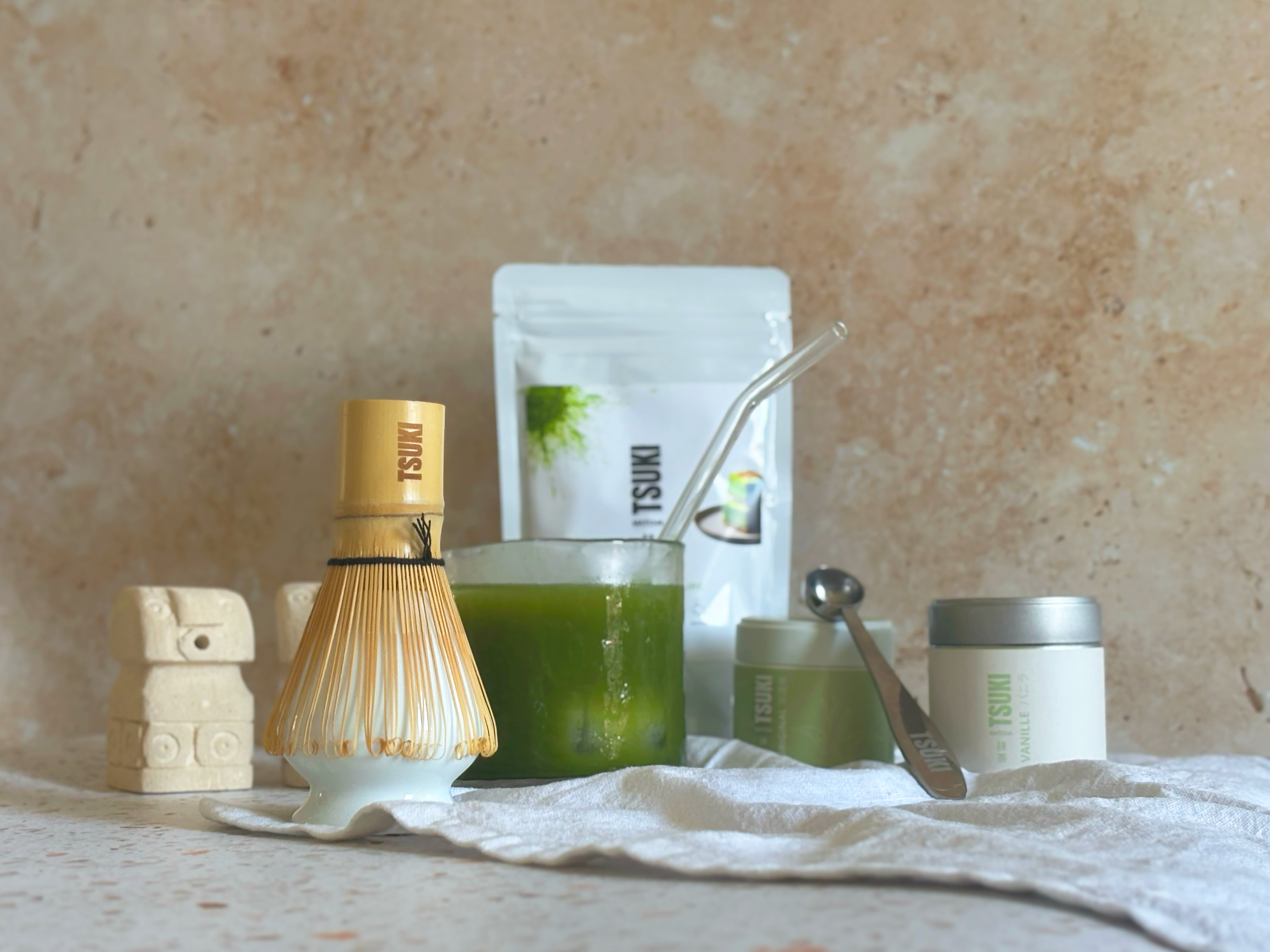
To do this, we recommend choosing our Original matcha or Vanilla matcha.

In just a few minutes, you can transform your break into a true moment of calm and concentration.

With quality matcha and the right accessories, preparing your matcha at home becomes a simple, daily pleasure.

100% Japanese matcha, cultivated with respect and expertise

All our matchas come from the Yabukita cultivar, known for its aromatic quality and rich umami.

The tea leaves are harvested in the Shizuoka and Kagoshima regions, renowned for their exceptional tea plantations.

The benefits of matcha tea ❤️

An exceptional concentration of antioxidants

One of the main benefits of matcha is its remarkable richness in antioxidants, particularly catechins like EGCG. Unlike infused tea, matcha is consumed as a fine powder, meaning the entire leaf is ingested. This peculiarity gives it a much higher concentration of polyphenols than classic green tea. These compounds help protect cells against oxidative stress and contribute to the overall proper functioning of the body.

A gentle and steady energy

Matcha naturally contains caffeine, but its effect is very different from that of coffee. Thanks to the presence of L-theanine, an amino acid developed during leaf shading, the energy is gradual and long-lasting. The result: stimulation without excessive nervousness or a sudden crash. This unique balance promotes concentration, creativity, and mental clarity.

Immune system support

Rich in essential vitamins and minerals such as potassium, magnesium, and zinc, matcha fits perfectly into a balanced routine. Its nutritional density makes it an interesting ally for supporting natural defenses, especially during seasonal changes.

An ally for the skin

Thanks to its high content of antioxidants, matcha helps combat the effects of oxidative stress on the skin. By protecting cells from free radicals, it helps preserve skin elasticity and maintain a radiant complexion. Its richness in chlorophyll also reinforces this "natural glow" dimension.

A partner in a weight management journey

Matcha is often associated with an active routine. Some studies suggest that catechins, especially EGCG, may support metabolism as part of a healthy lifestyle. It is not a miracle product, but an interesting supplement when combined with a balanced diet and regular physical activity.

A balance between relaxation and stimulation

The unique combination of caffeine and L-theanine provides a dual effect: it is both stimulating and soothing. This harmony explains why matcha was historically consumed by Buddhist monks during meditation. It promotes a state of calm alertness, conducive to refocusing and well-being.

An alkalizing and anti-inflammatory tea

Matcha naturally fits into a plant-rich diet. Its composition helps support acid-base balance and contributes to a holistic approach aimed at reducing chronic inflammation associated with modern lifestyles.